
Nool Vanam
RM458.00
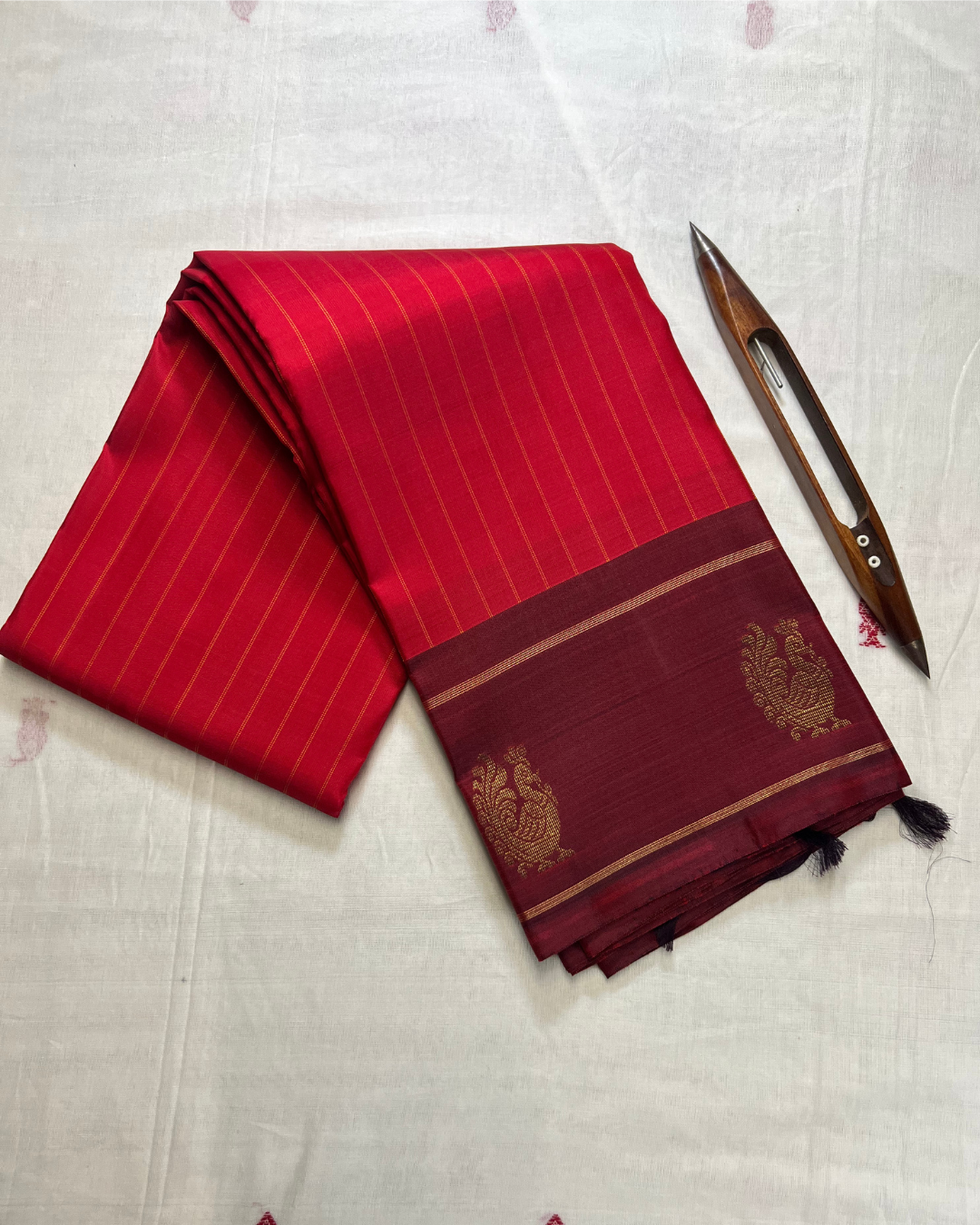
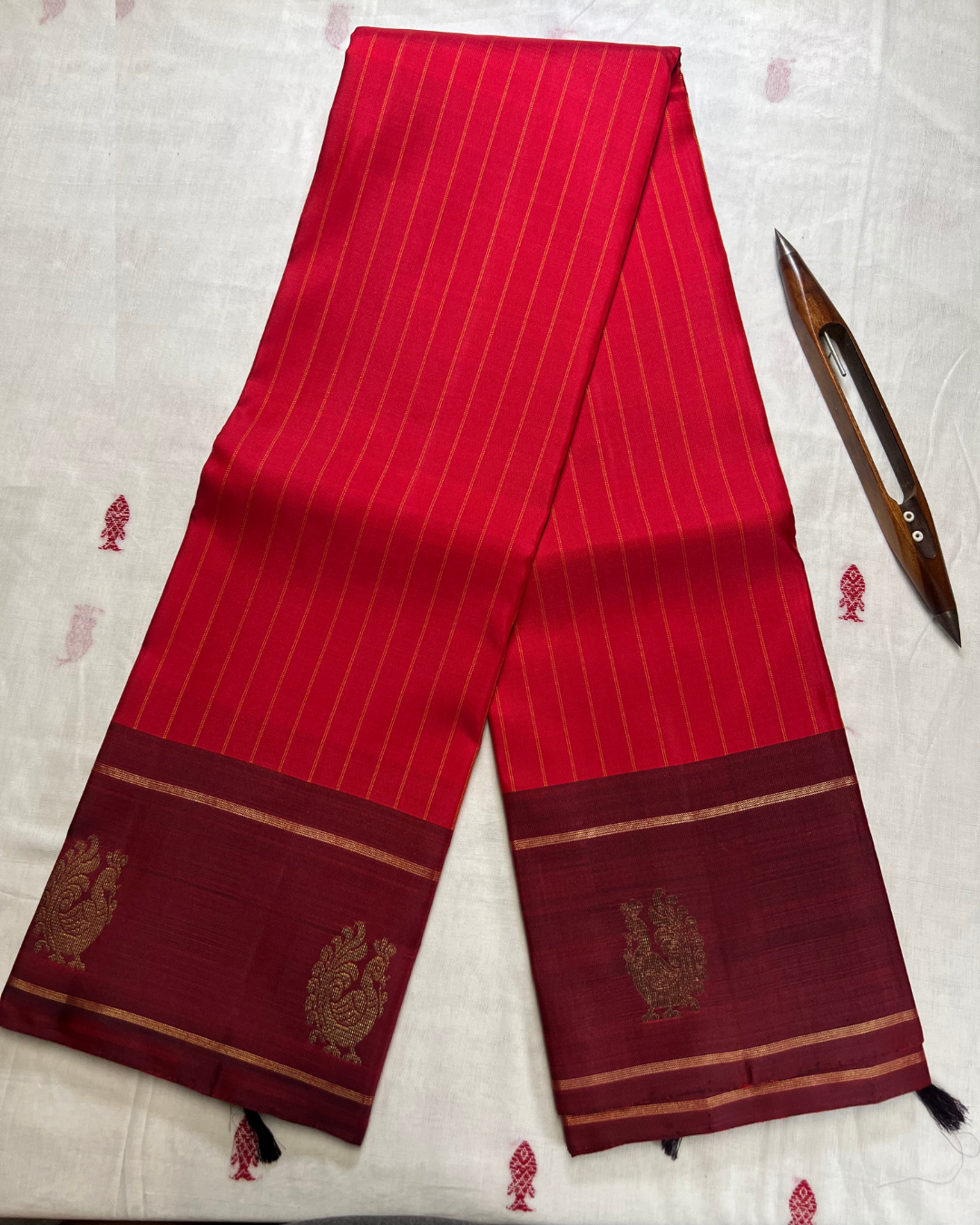
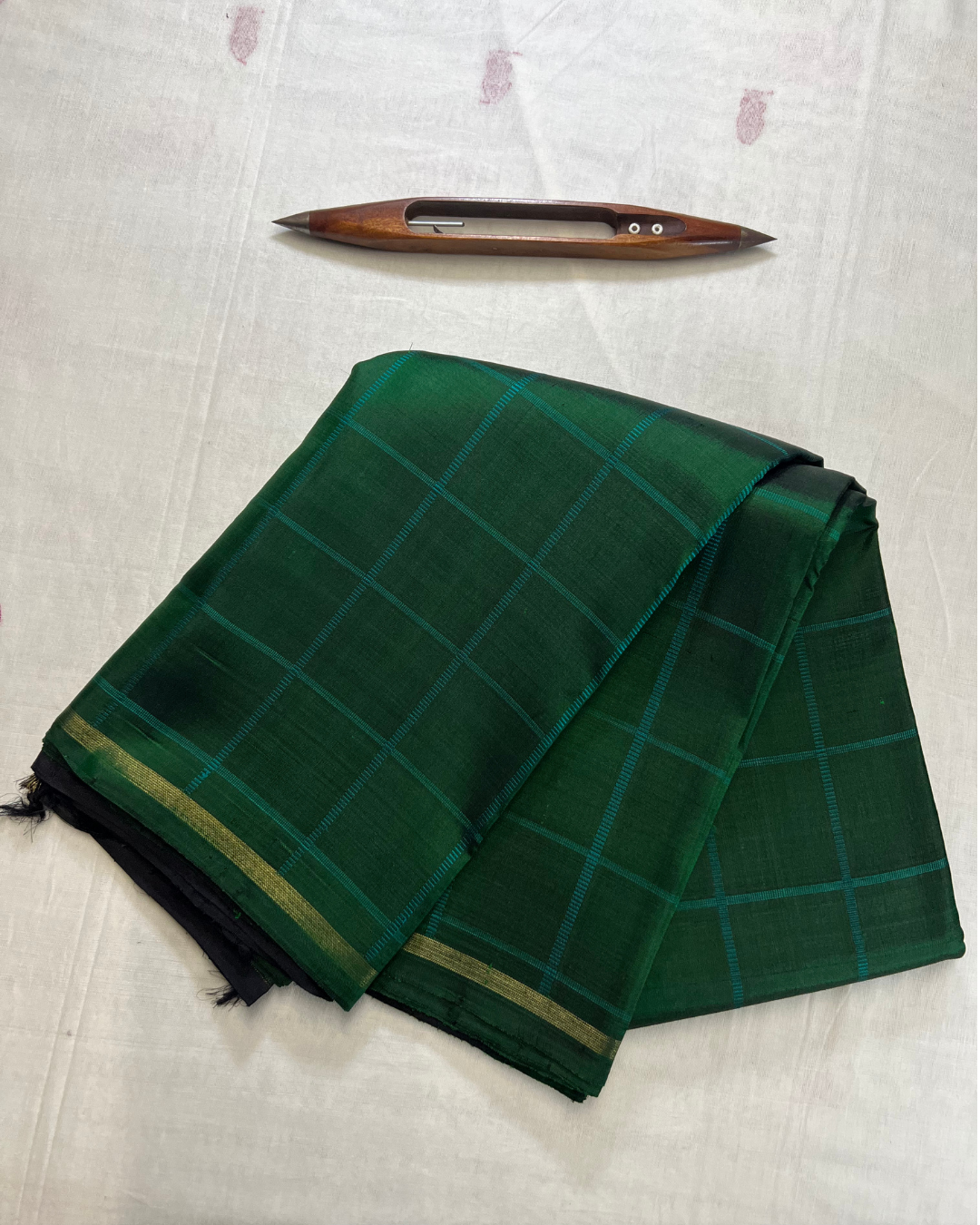
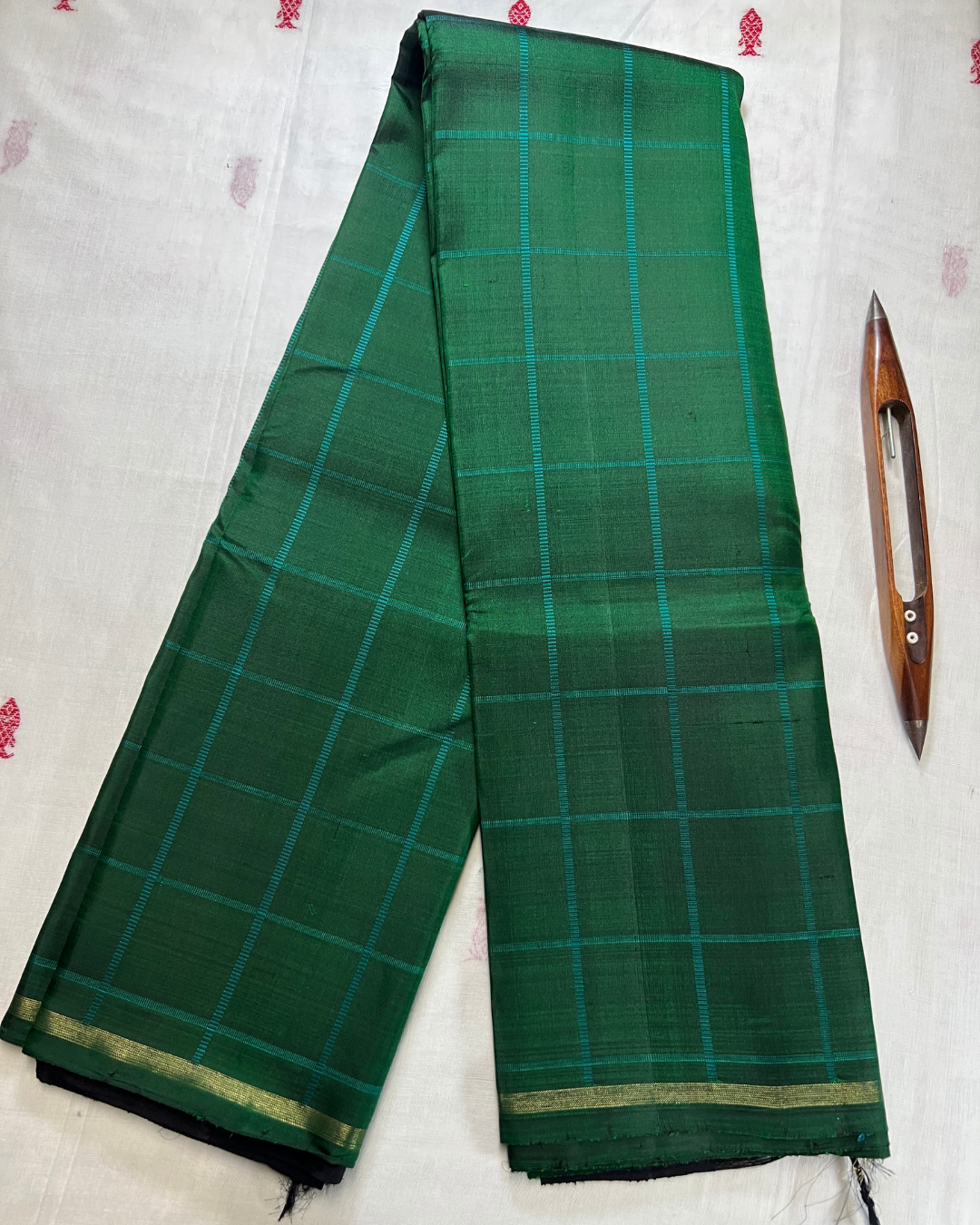
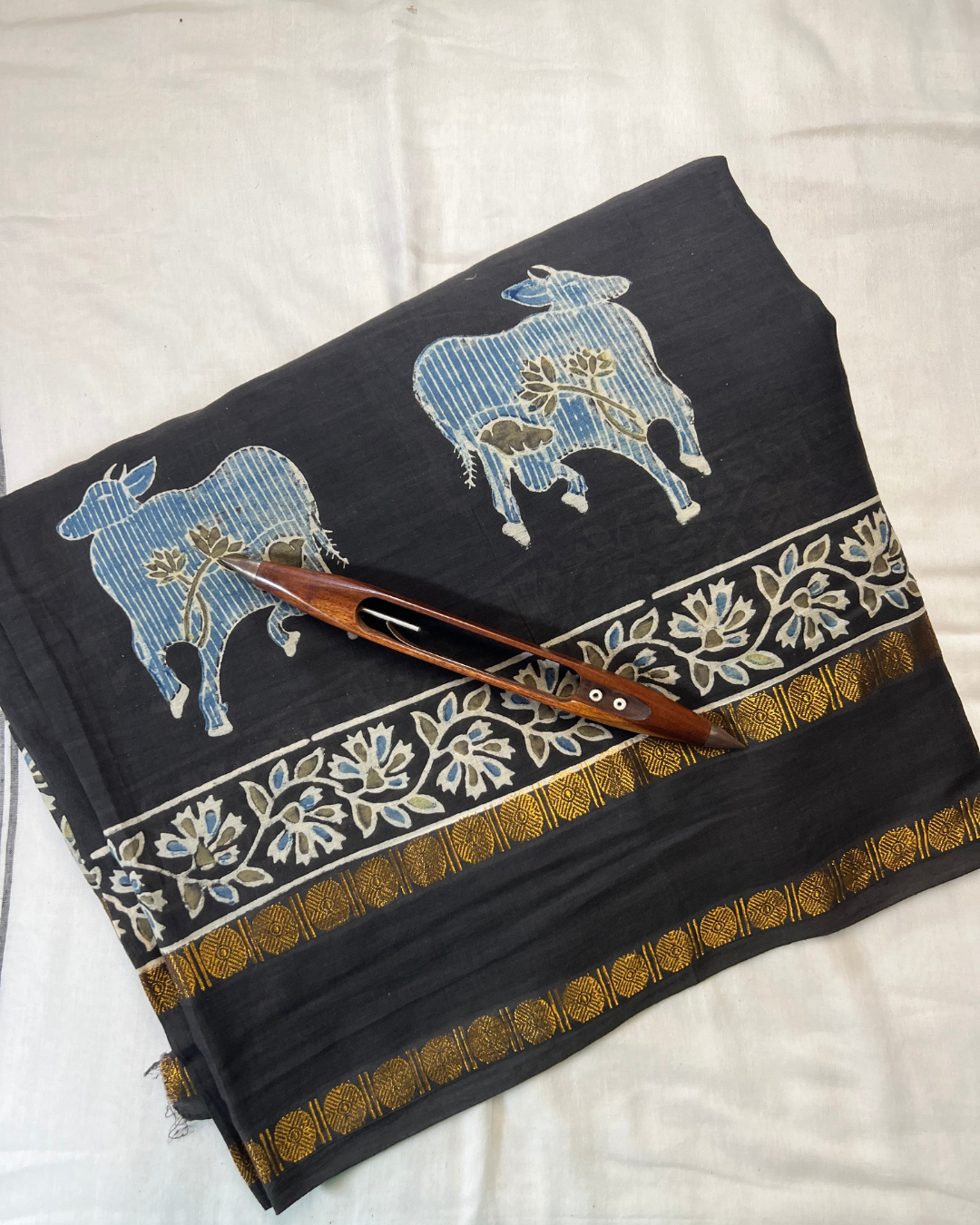
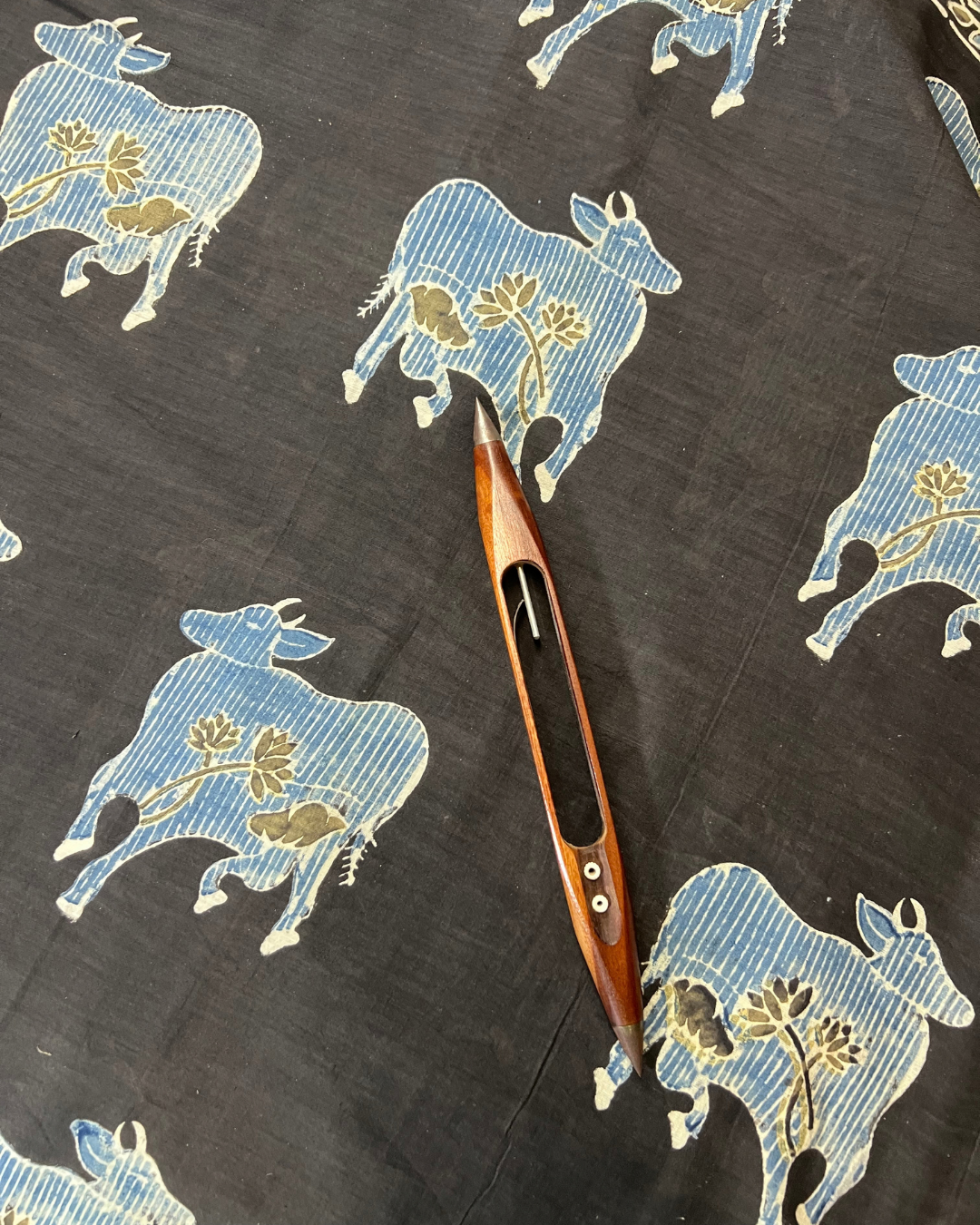
Striking charcoal black Madurai Sungudi cotton saree adorned with artistic blue block-printed Kamadhenu motifs across the body, framed by a detailed floral-printed and golden zari rudraksham rettapet border; finished with a richly patterned thalapoo for a blend of traditional artistic charm and easy, breathable comfort.
1 in stock
A Legacy of Dots, Dye & Handcraft
Madurai Sungudi is one of Tamil Nadu’s most distinctive traditional textile traditions. The name Sungudi is associated with the characteristic tie-and-dye process that creates its familiar pattern of tiny dots across the fabric. Madurai Sungudi is officially registered as a Geographical Indication (GI) handicraft of Tamil Nadu.
The craft became closely associated with Madurai, where generations of weavers and dyers developed and preserved the technique. The fabric is traditionally prepared by carefully tying portions of the cloth and dyeing it, creating small resist-dyed dots and patterns. When the ties are removed, the characteristic Sungudi pattern emerges.
The beauty of Sungudi lies in its simplicity and rhythm. Thousands of tiny dots come together to create a distinctive visual texture, often complemented by traditional borders and vibrant colours.
Madurai Sungudi is particularly valued because the beauty is created through the hands of the artisan rather than through elaborate ornamentation. Each piece reflects patience, precision and generations of textile knowledge.
Today, Madurai Sungudi stands as an important part of Tamil Nadu’s handloom heritage — a saree that carries the colour, character and craftsmanship of Madurai.
Not just dots on a saree.
Each dot carries the hand of a craftsman,
and together they tell the story of Madurai.
Threads — Noolgal Tharum Anandham
| Weight | 1 kg |
|---|