Thugiloli
RM508.00
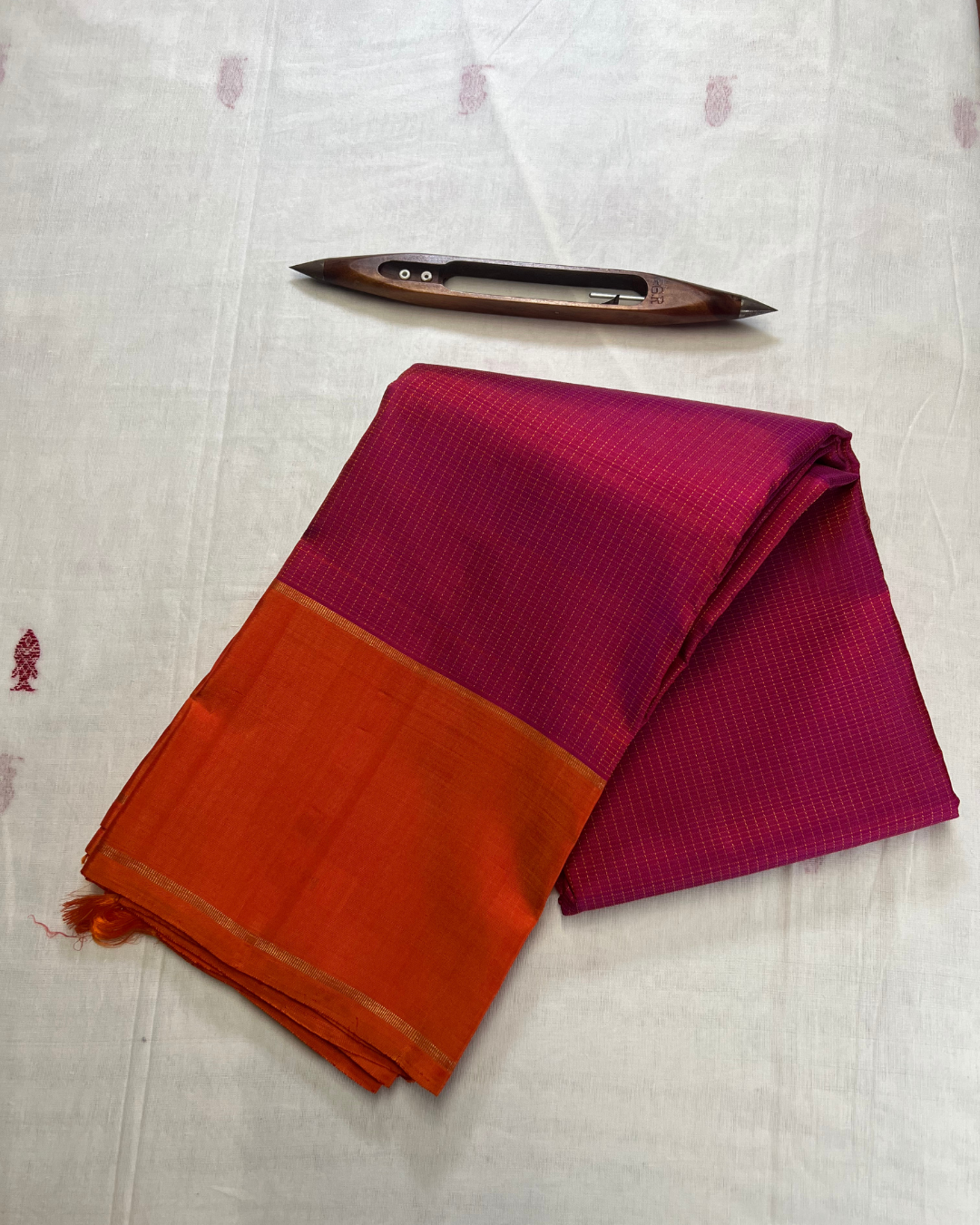
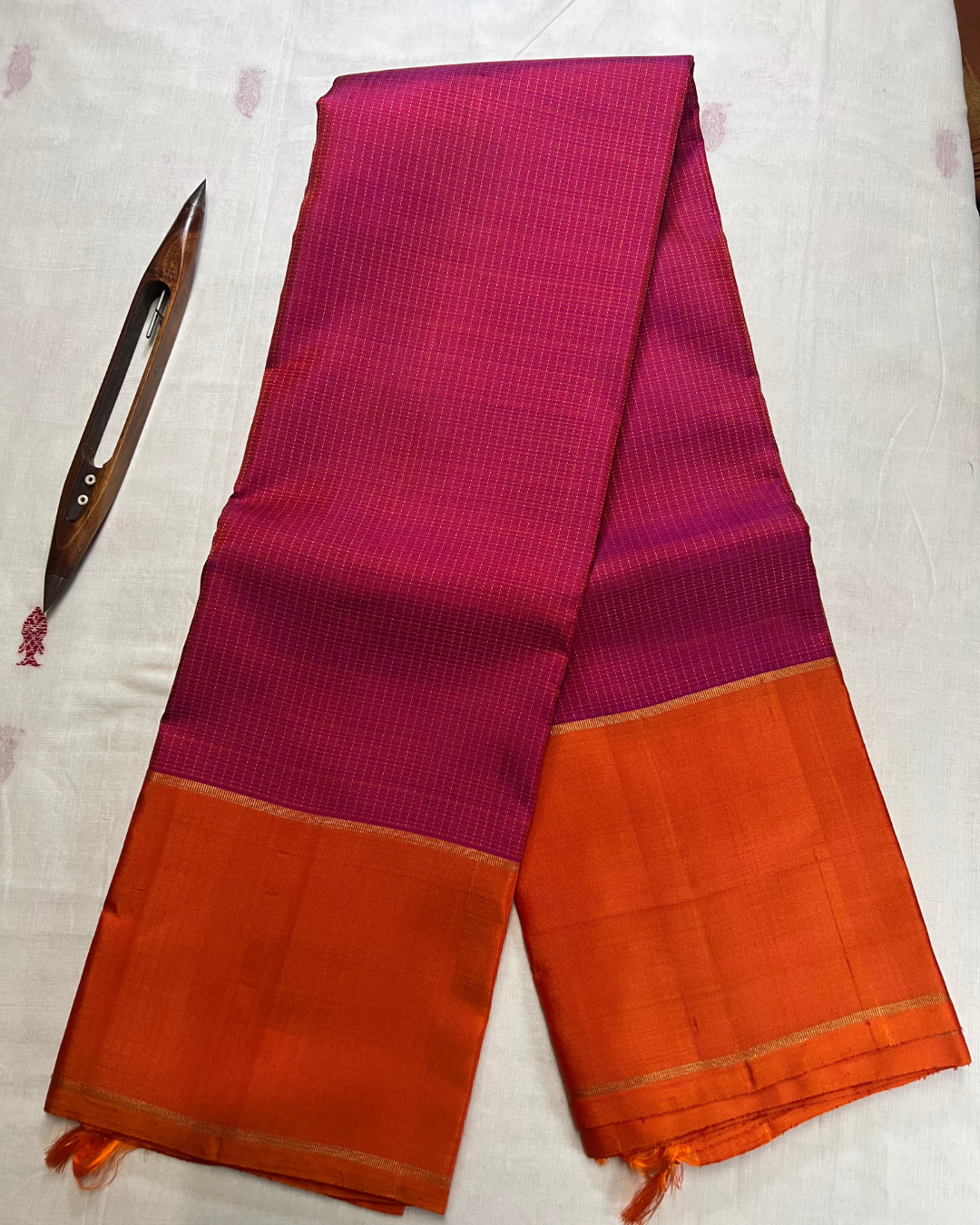
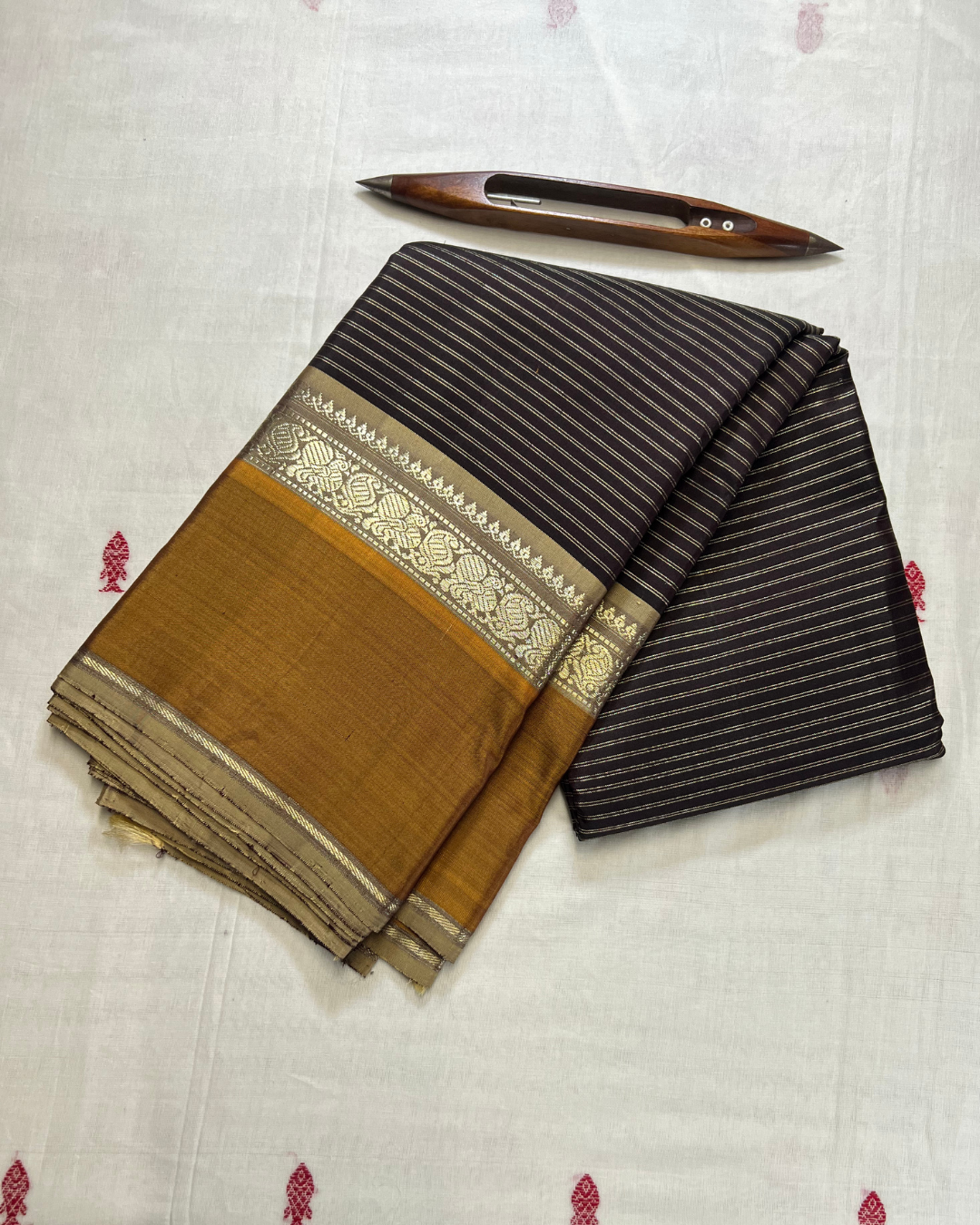
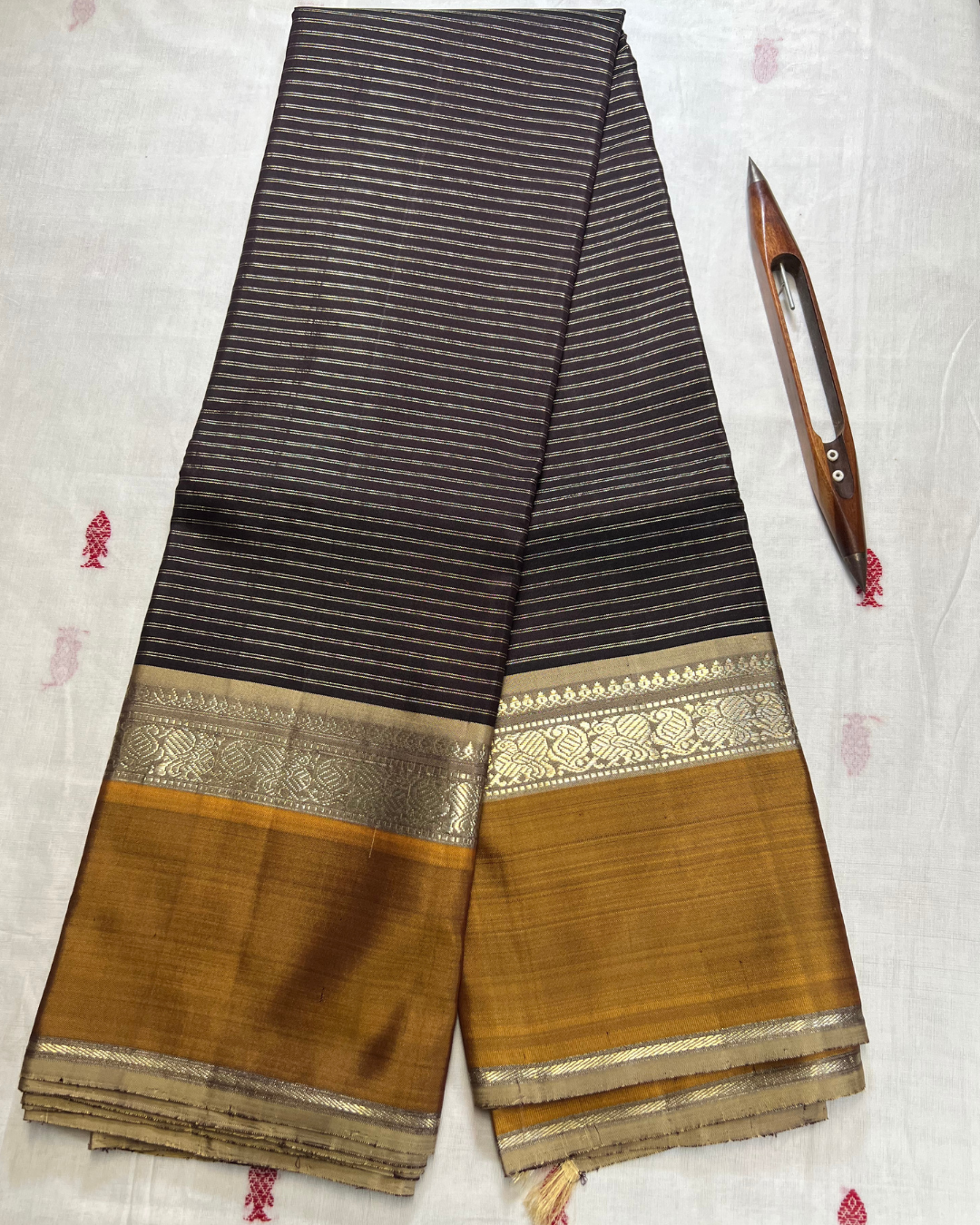
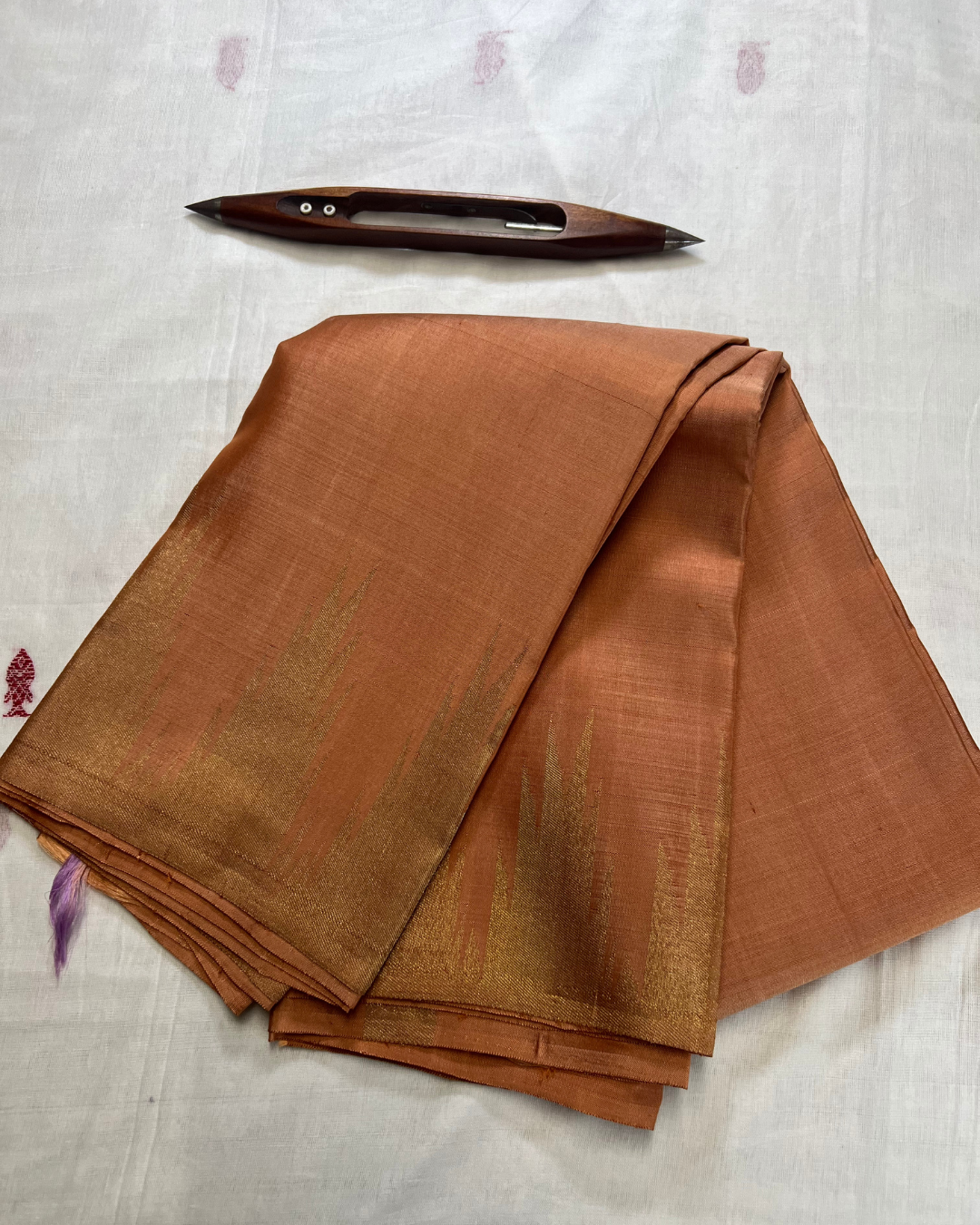
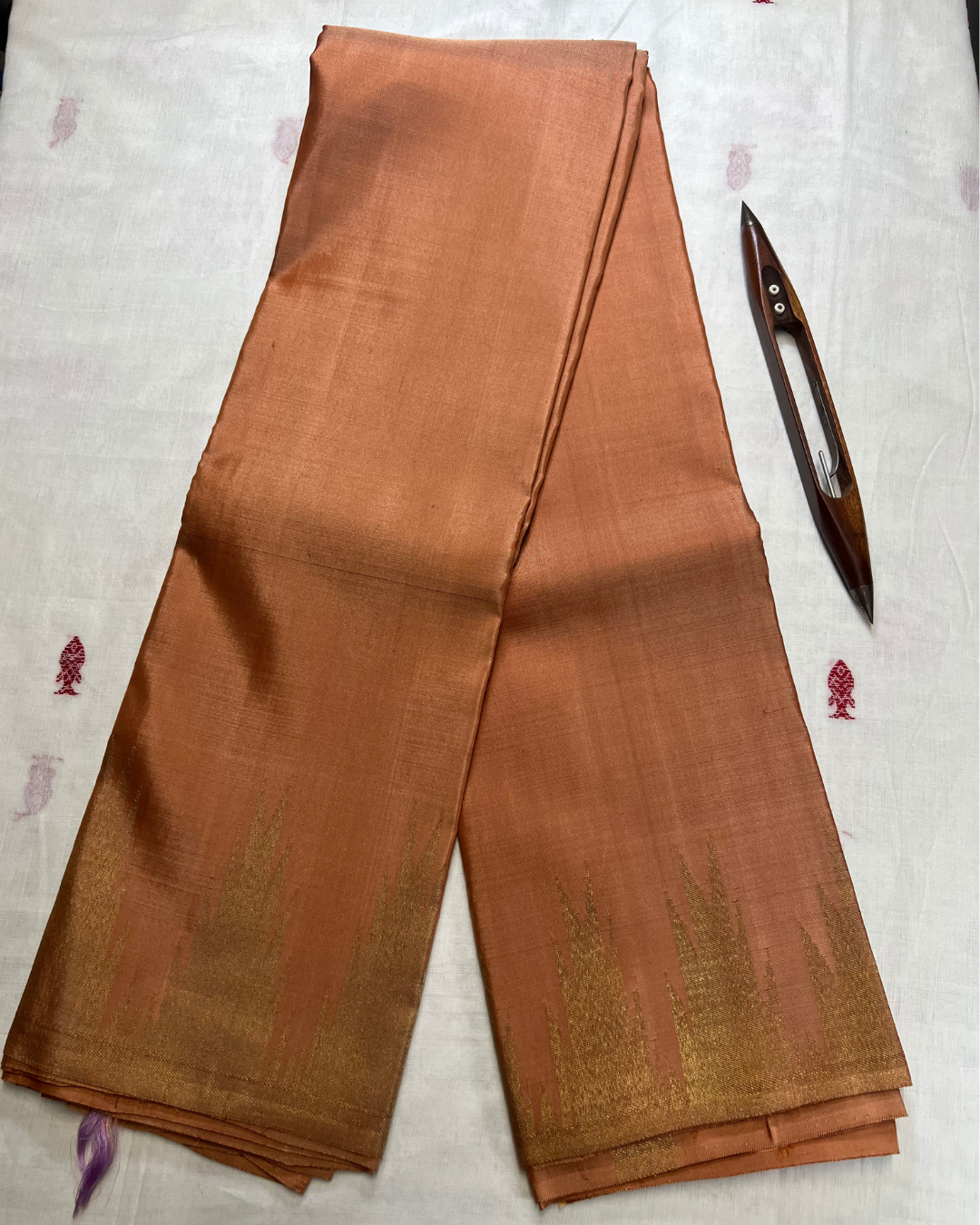
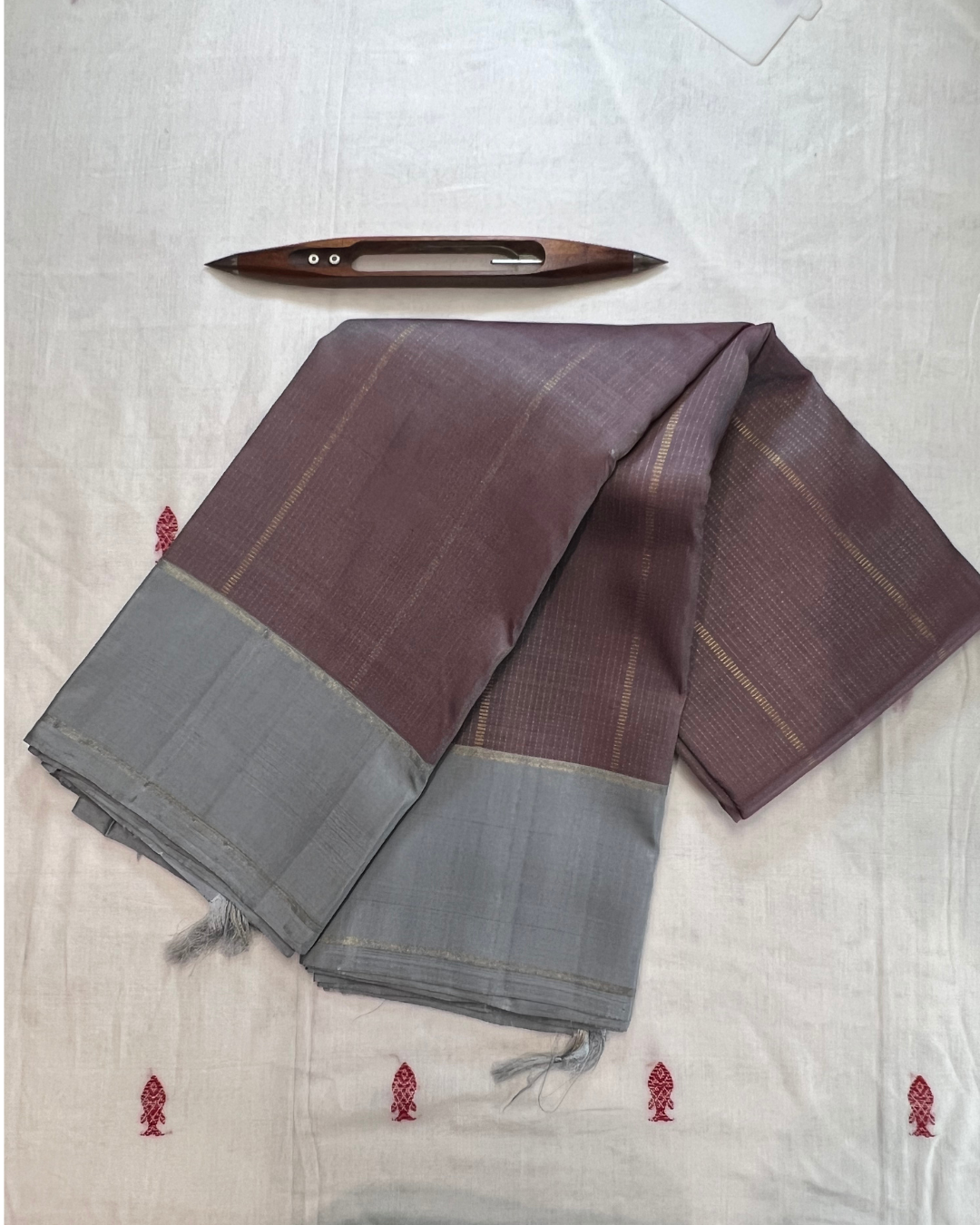
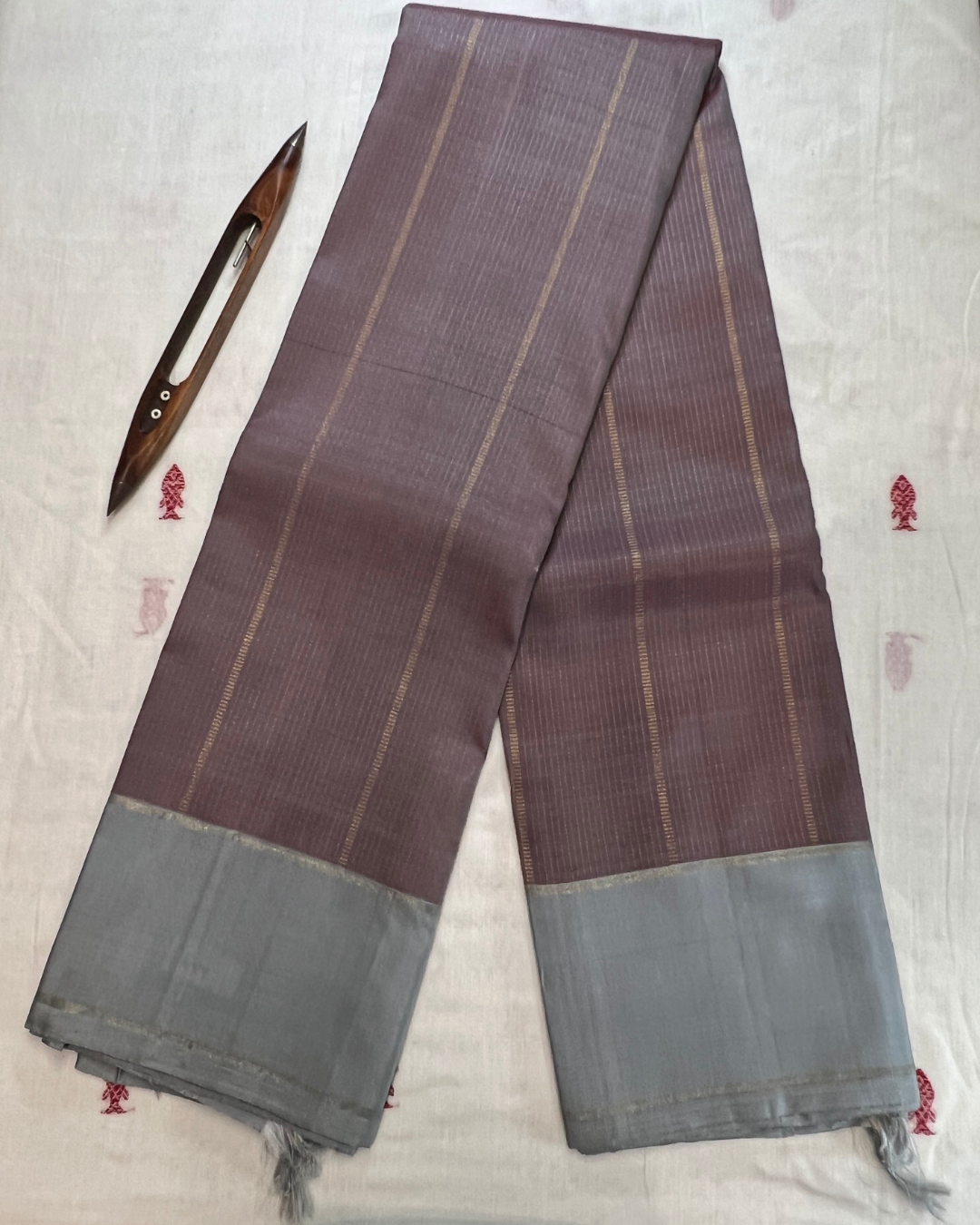
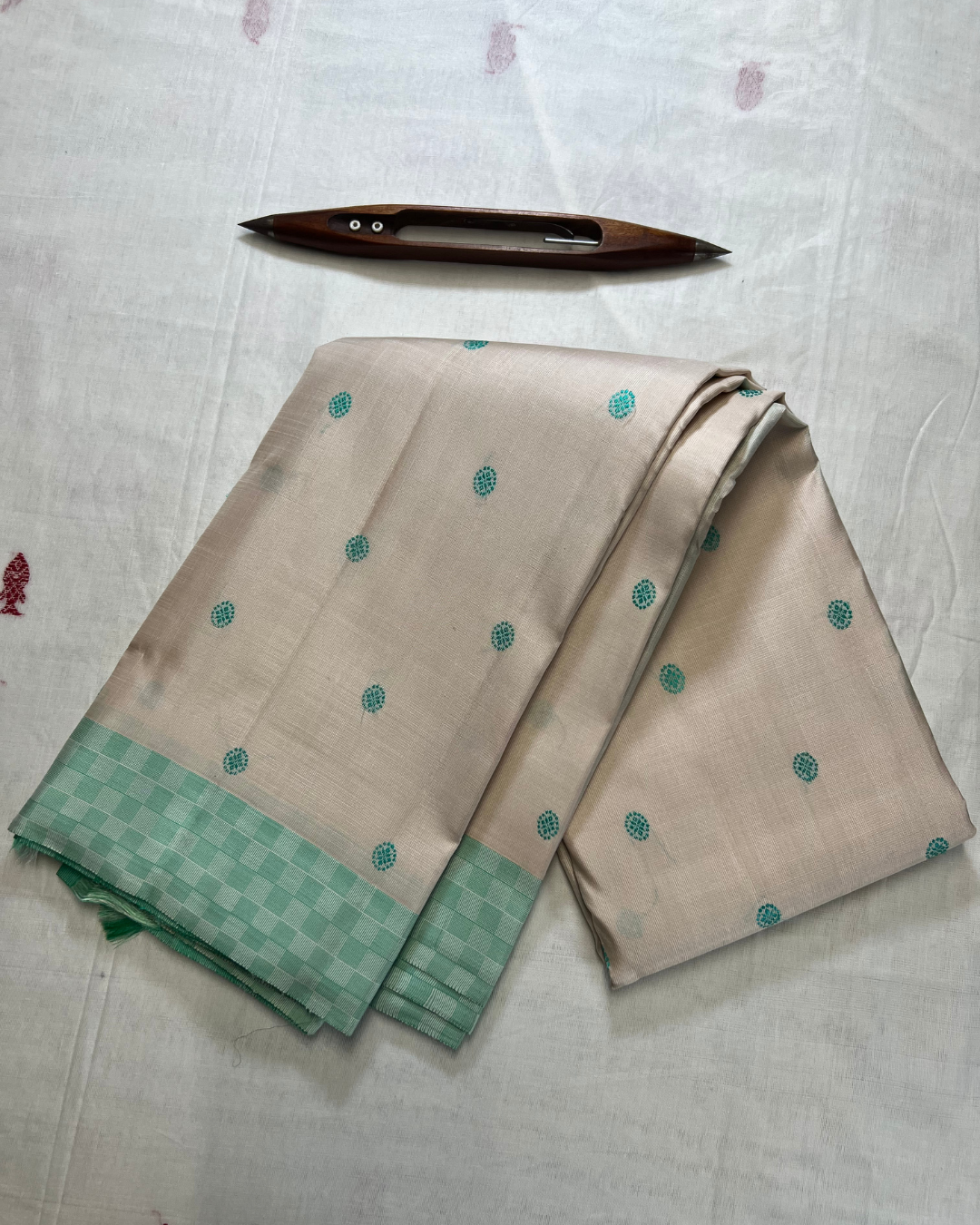
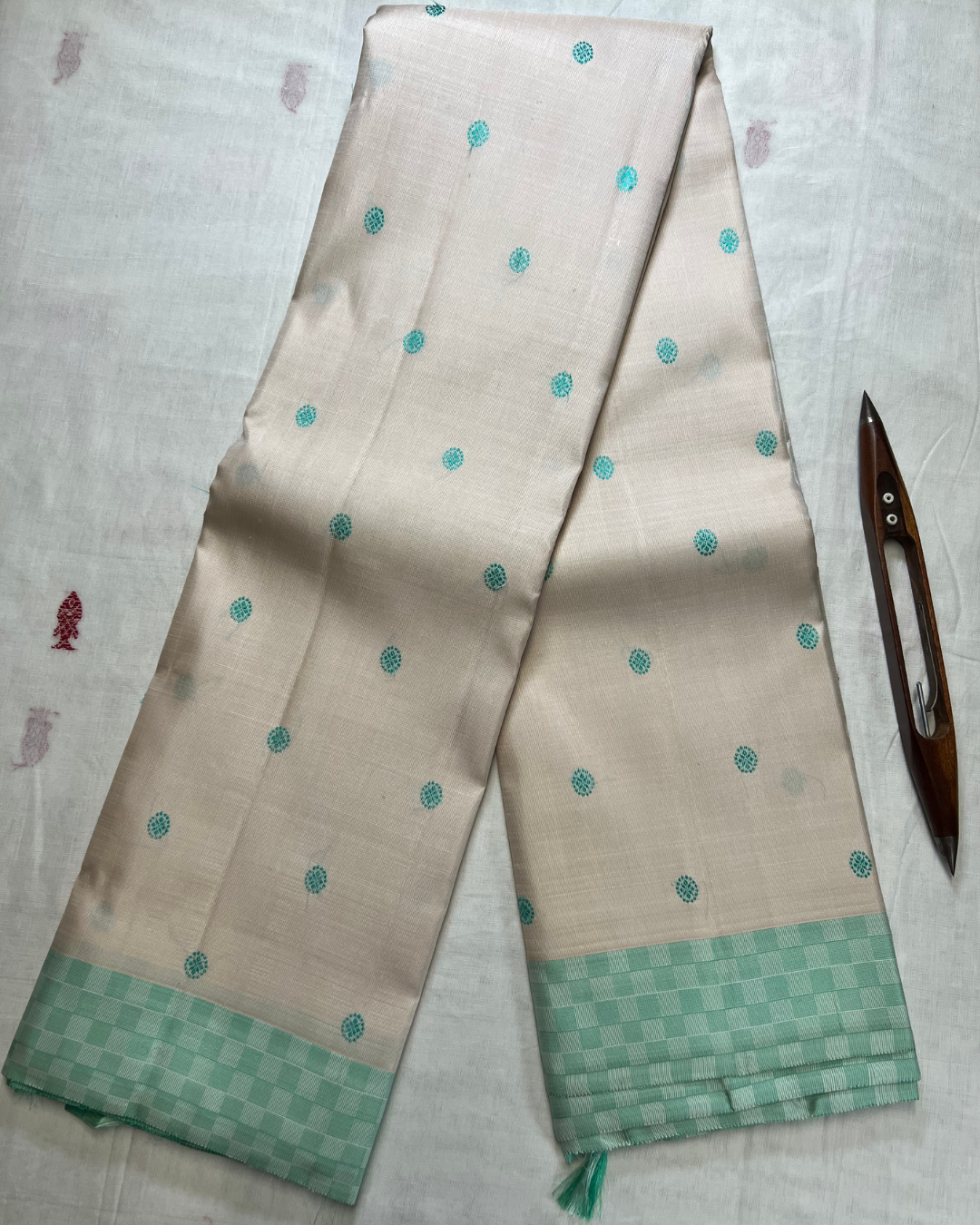
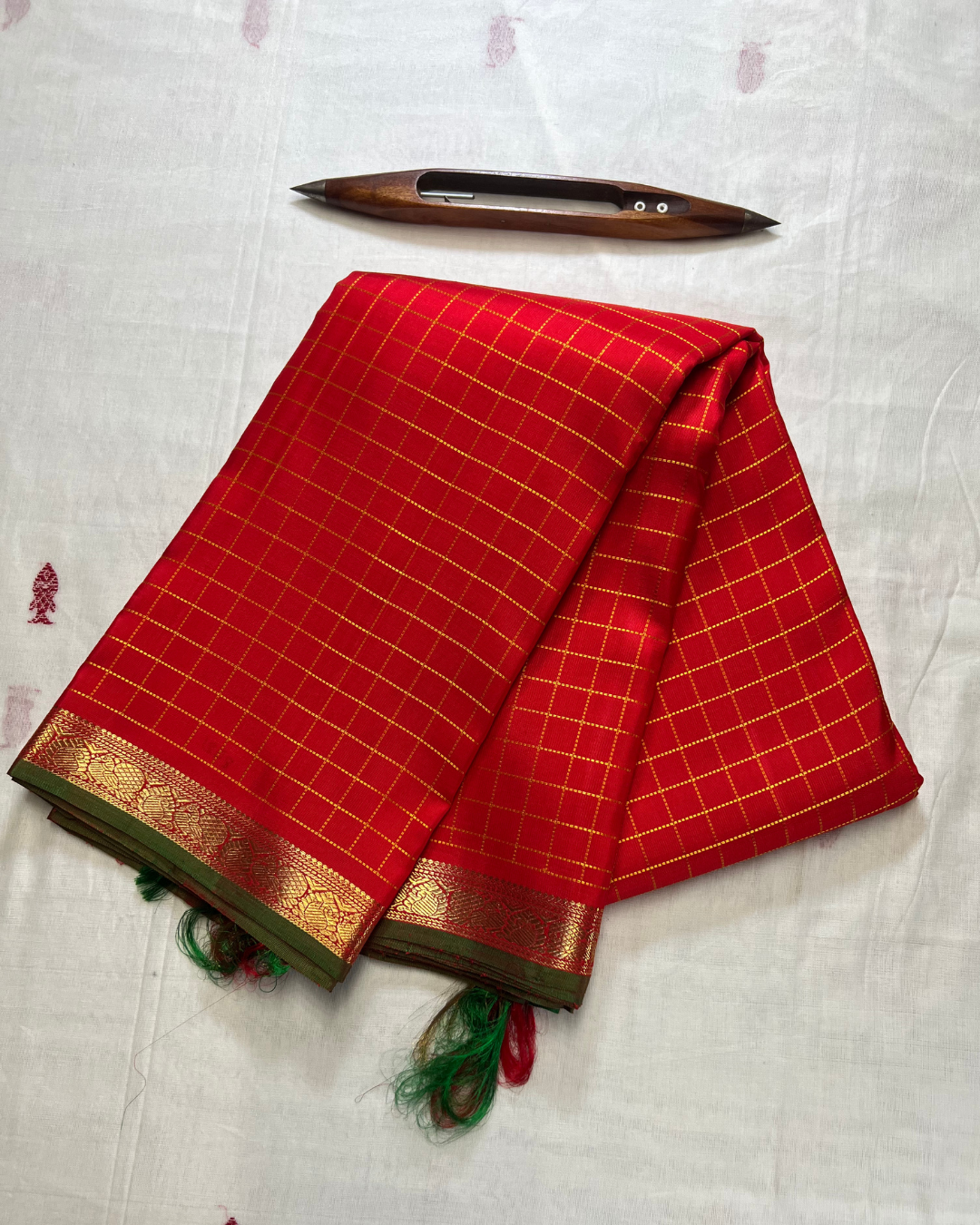
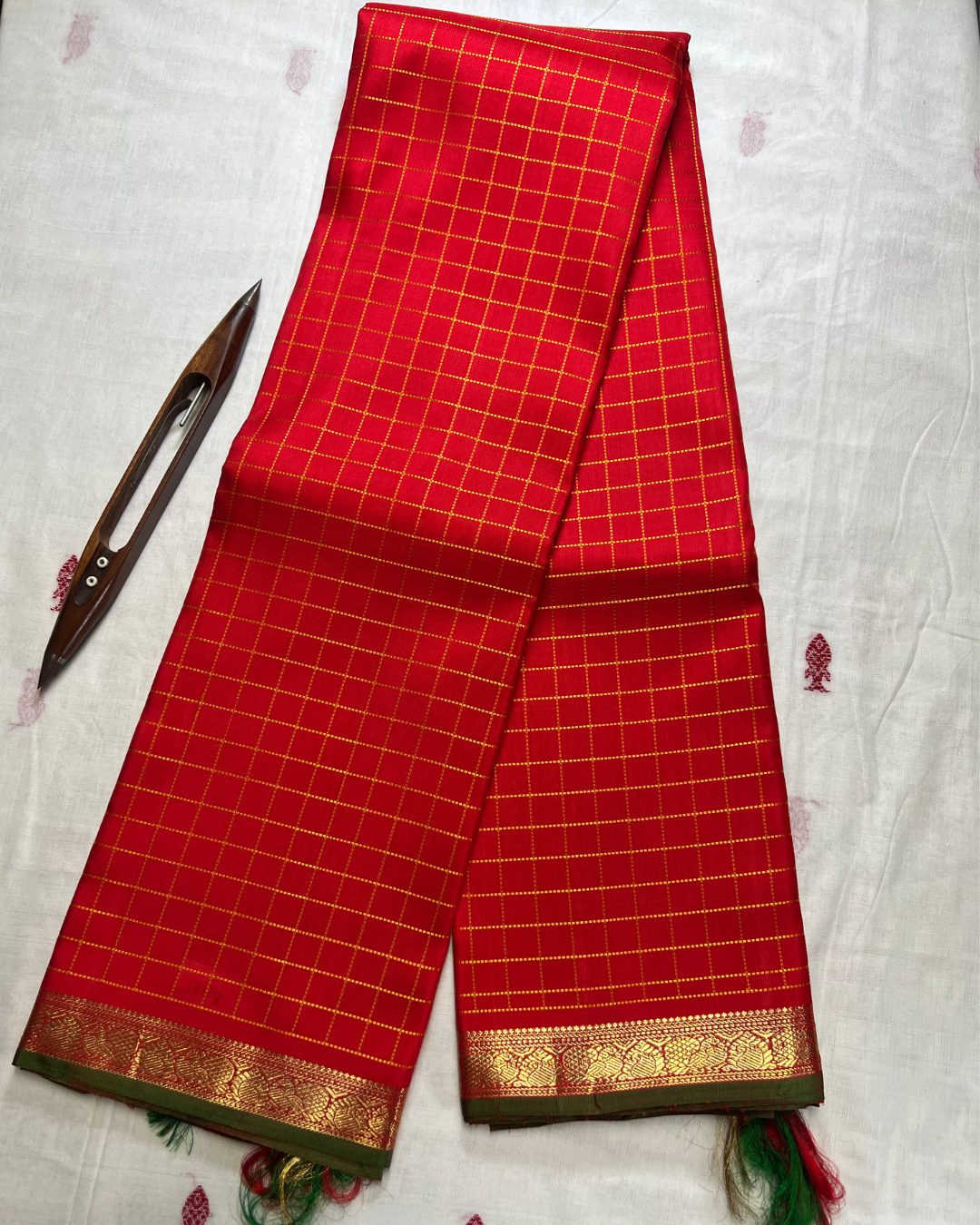
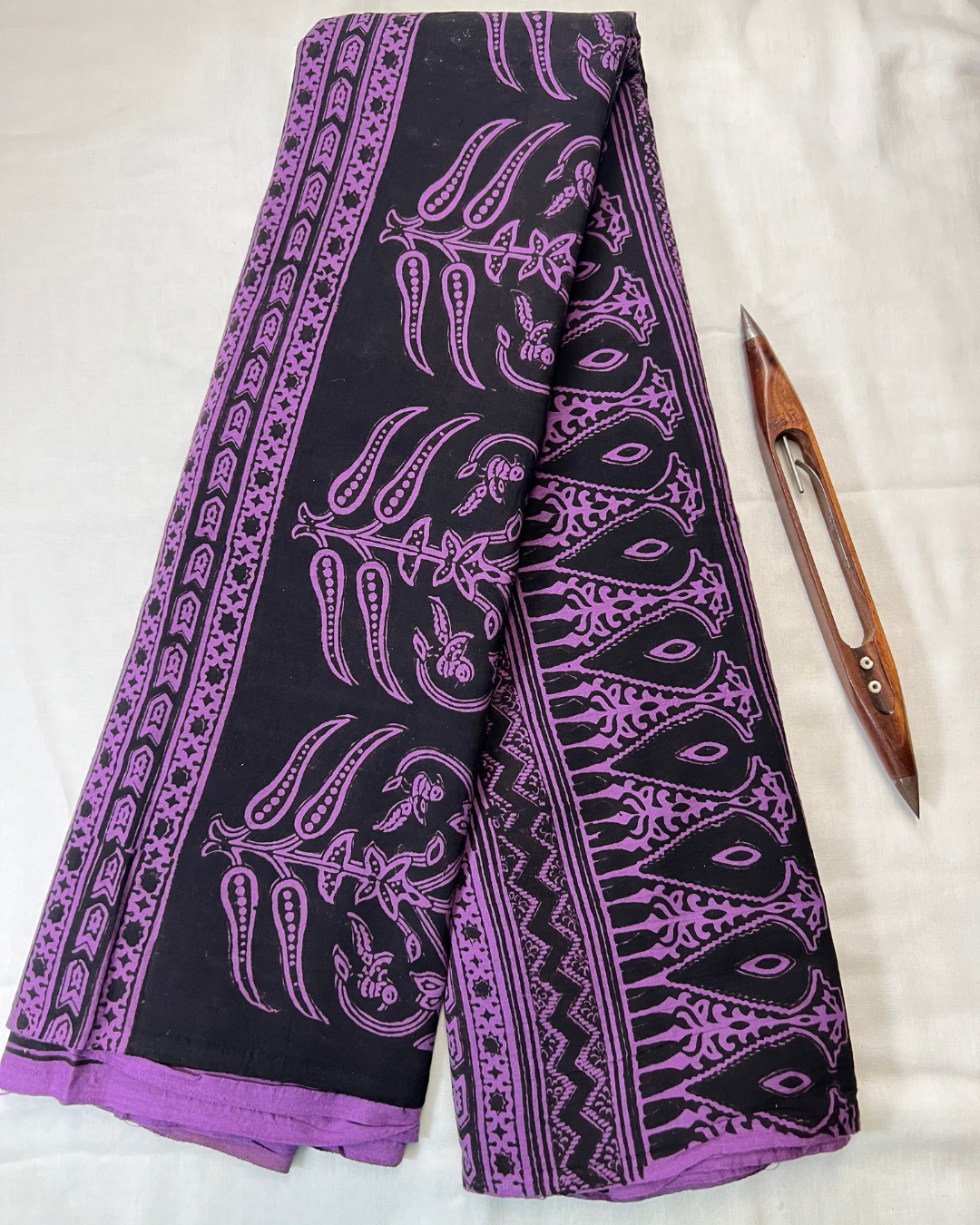
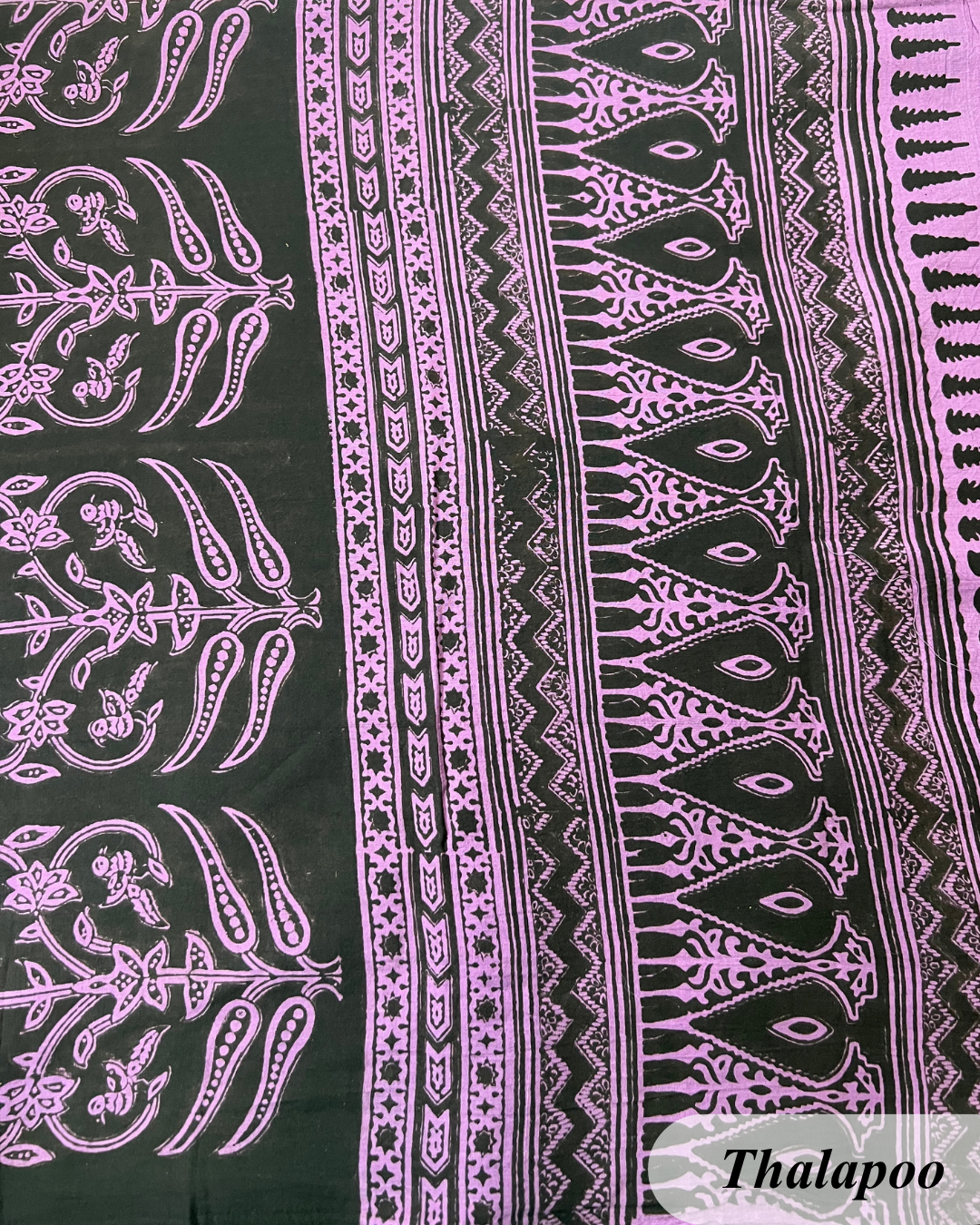
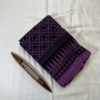
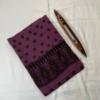
Charcoal black and vibrant lavender Kodali Karuppur saree paired with a matching polka dot blouse piece, featuring block-printed tree-of-life floral motifs, intricate geometric borders, and a grand thalapoo pallu; a striking, high-contrast tribute to traditional artistry with contemporary charm.
1 in stock
Kodali Karuppur saree has a fascinating royal history. It is not simply a silk saree; the traditional Kodali Karuppur textile is especially known for its fine cotton base combined with zari/jamdani weaving, resist work, hand painting and block printing.
The history of Kodali Karuppur
Kodali Karuppur is the name of a village in the Thanjavur/Kumbakonam region of Tamil Nadu, and the textile takes its name from this place. Historical sources place its development particularly under the Maratha rulers of Thanjavur, when royal patronage helped the craft flourish.
During the 18th and 19th centuries, Kodali Karuppur textiles were associated with the Thanjavur royal household and nobility. They were used for important occasions, including royal weddings, and some were presented as khillat — garments of honour.
What makes the textile extraordinary is that three different artistic traditions come together in one cloth:
* Jamdani-style weaving — zari motifs are woven into the fine cotton.
* Wax-resist work — areas of the design are protected with wax before colouring.
* Hand painting and block printing — traditionally using natural/vegetable colours.
The woven zari motifs and the painted or printed motifs were carefully coordinated, creating the distinctive rich, almost shimmering patterned effect for which Kodali Karuppur is remembered. Traditional designs include geometric forms, floral and leaf forms, creepers, birds, elephants and other stylised motifs.
| Weight | 1 kg |
|---|
Related products