Muppagam Rani
RM1,498.00
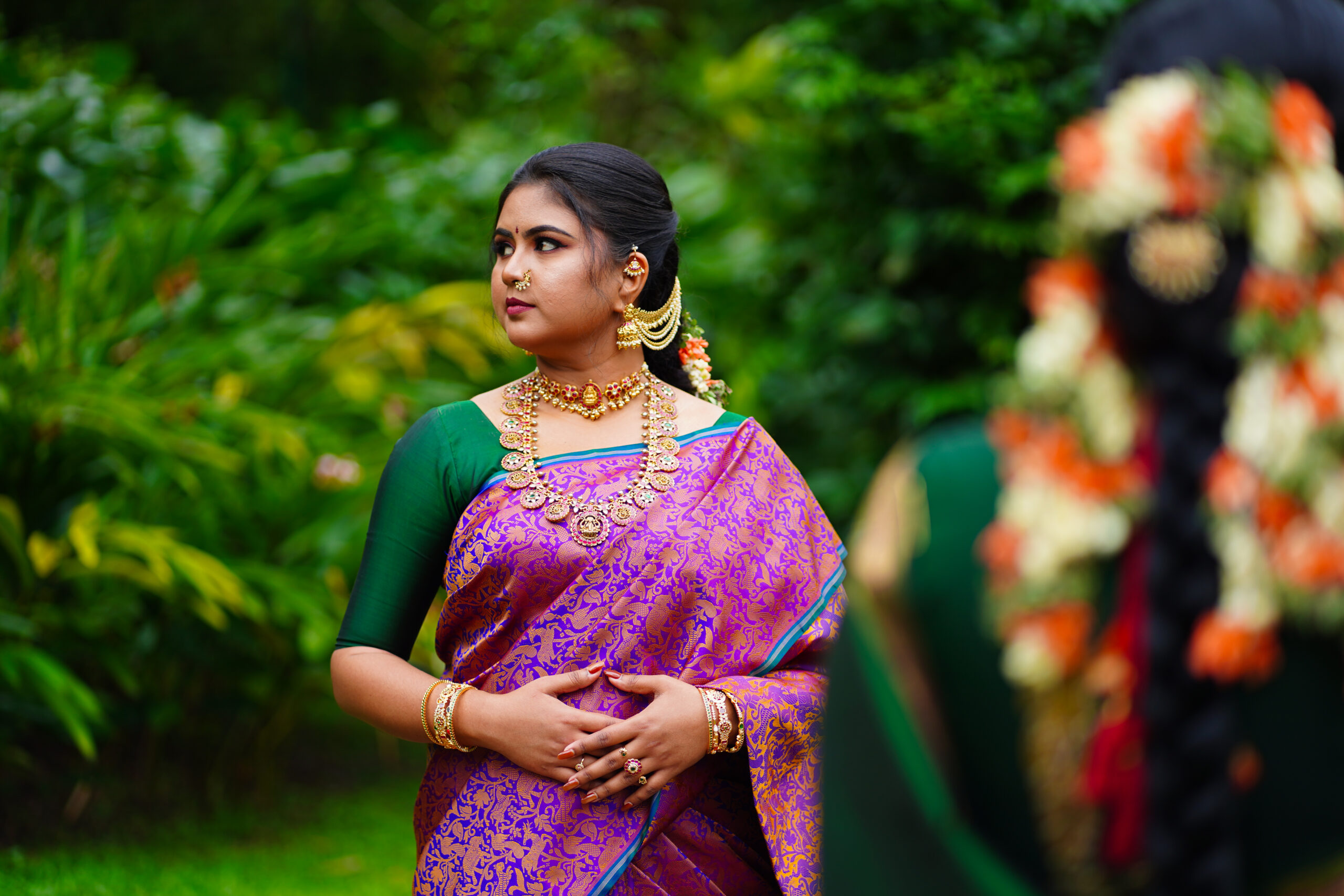
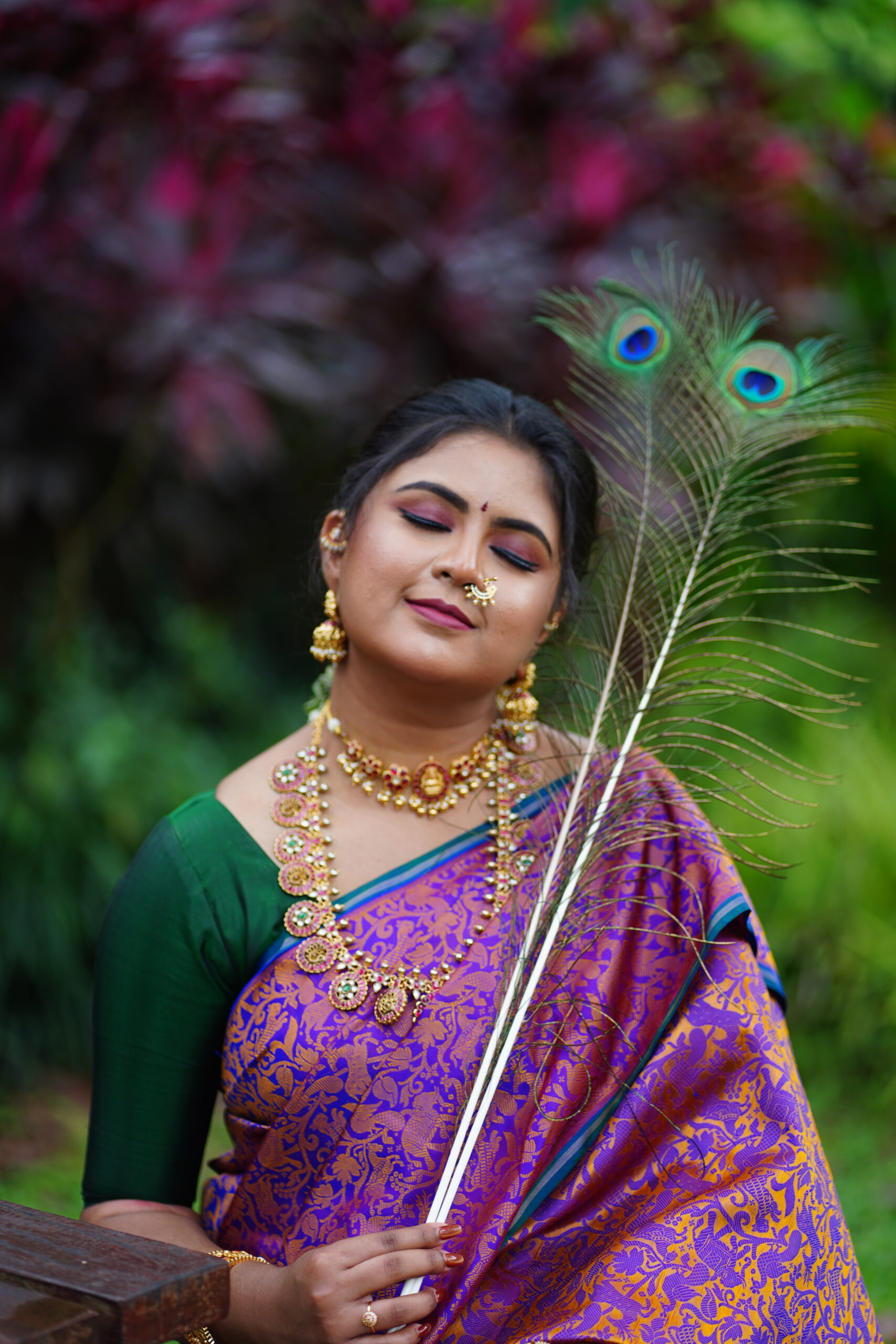
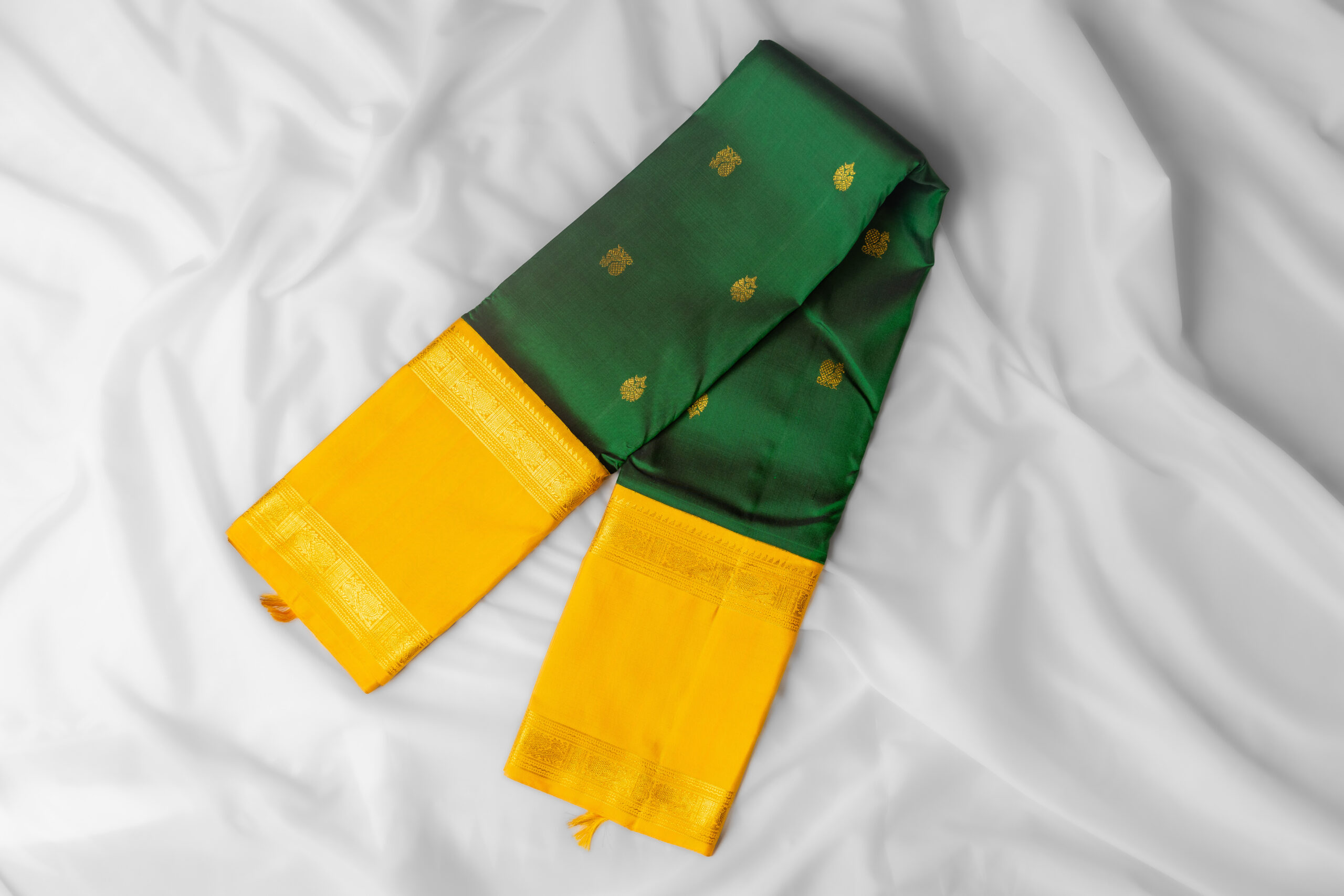
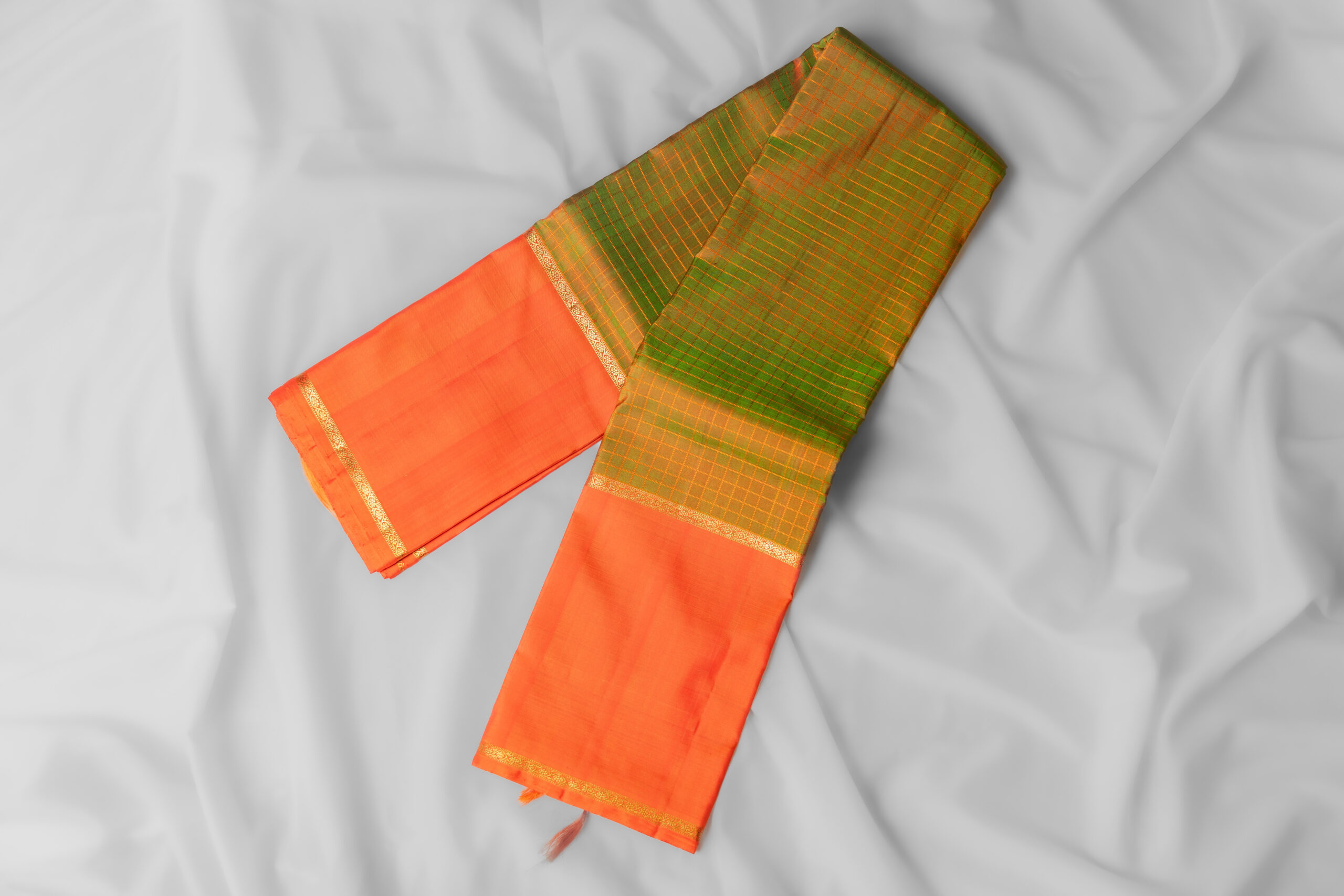
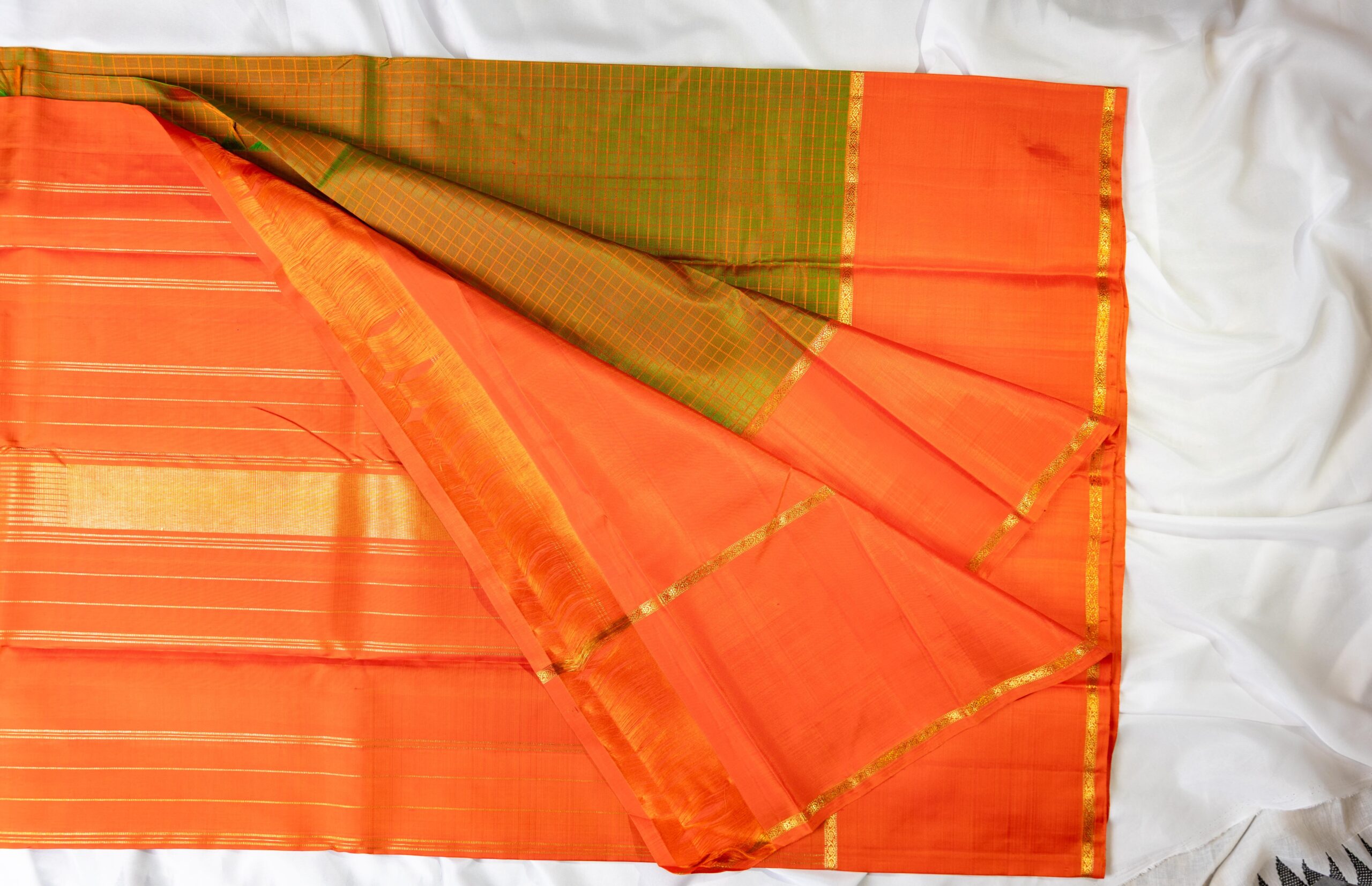
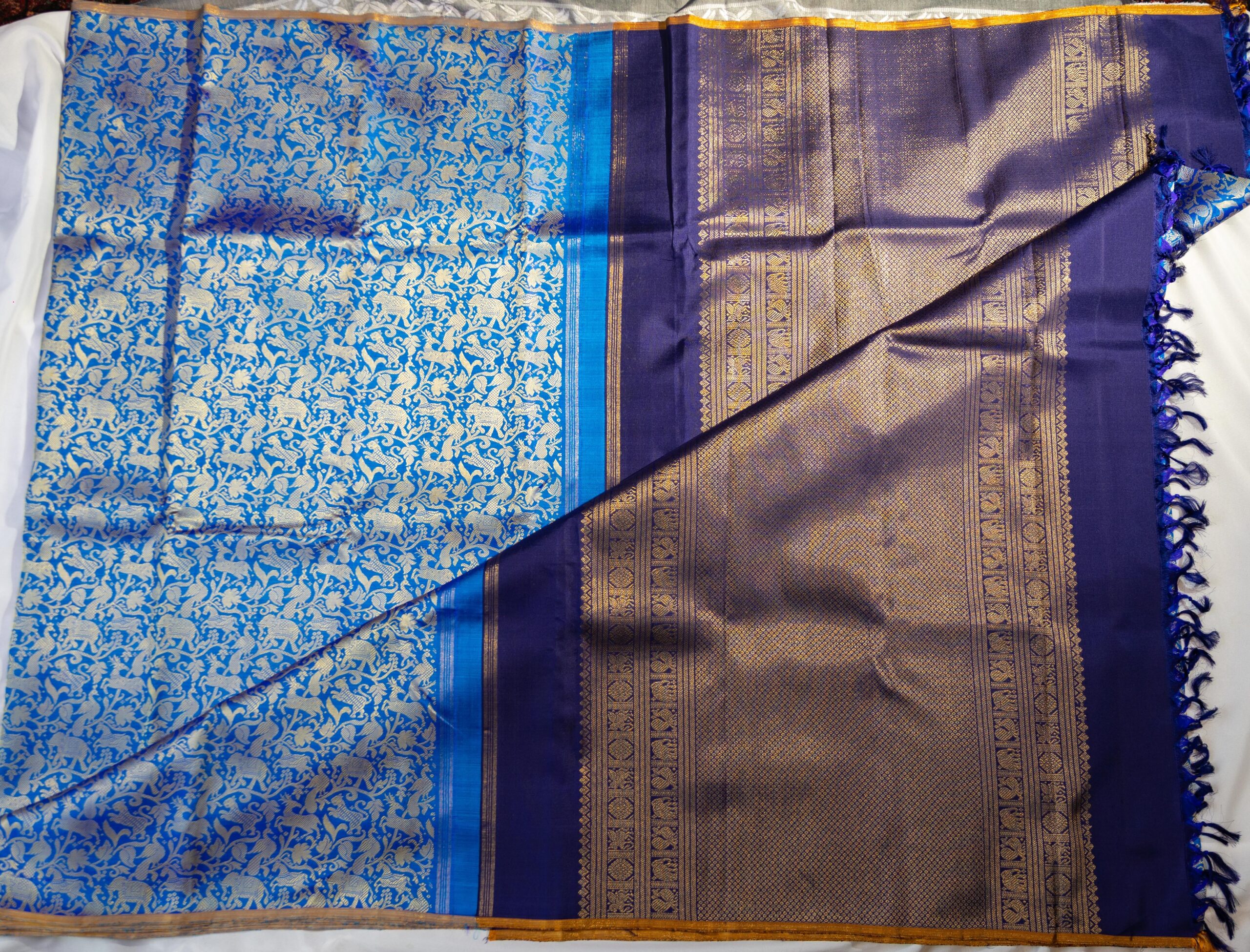
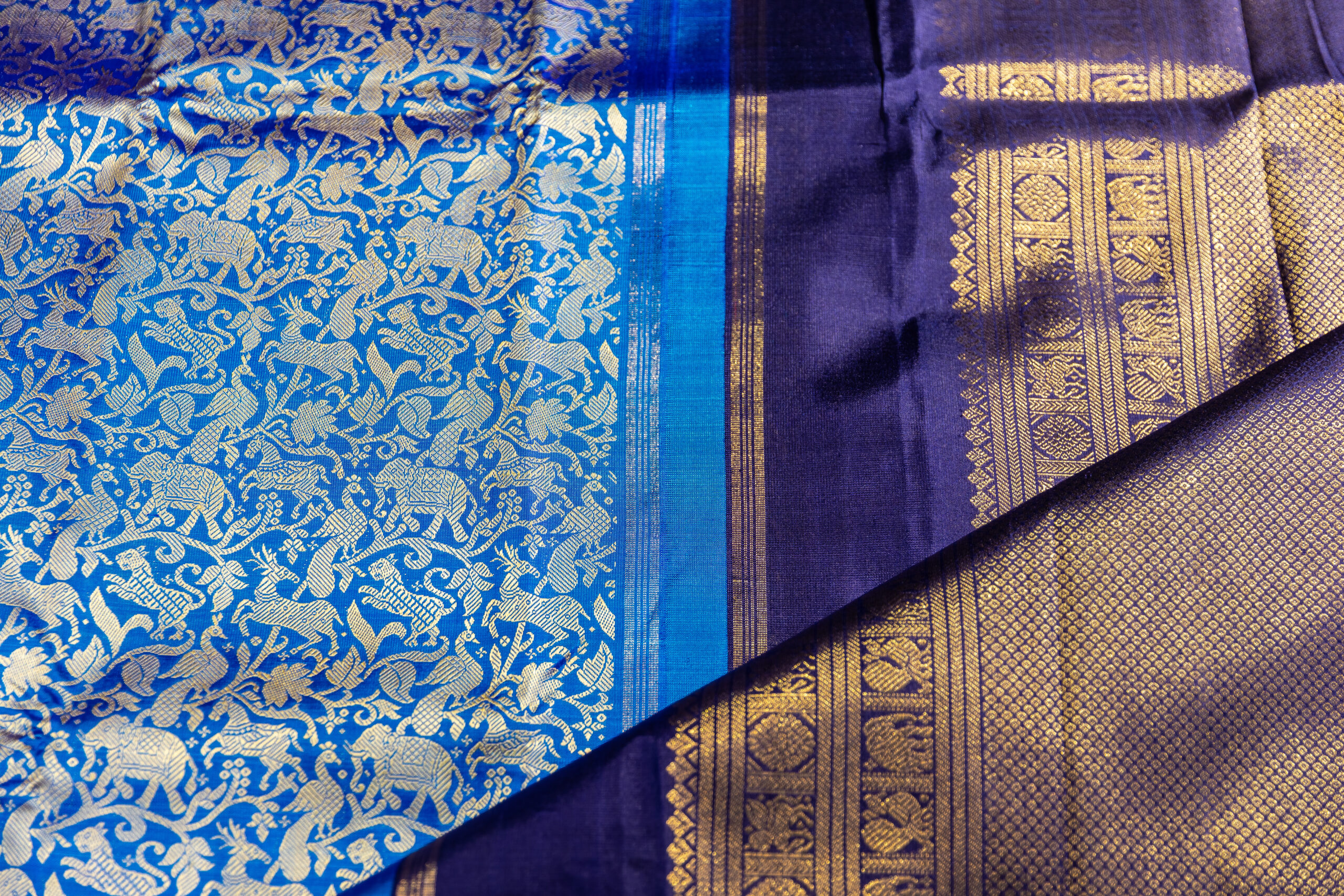
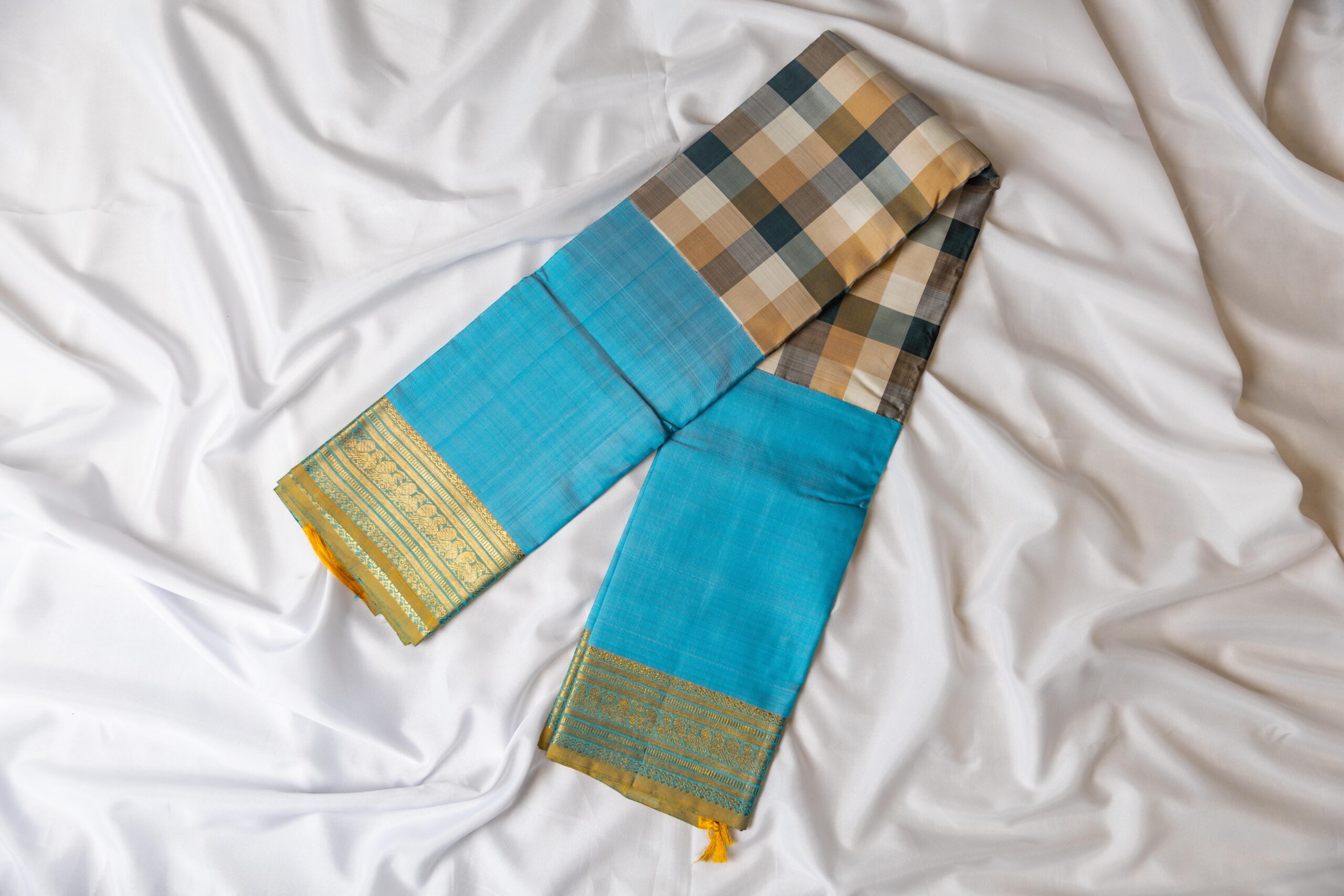
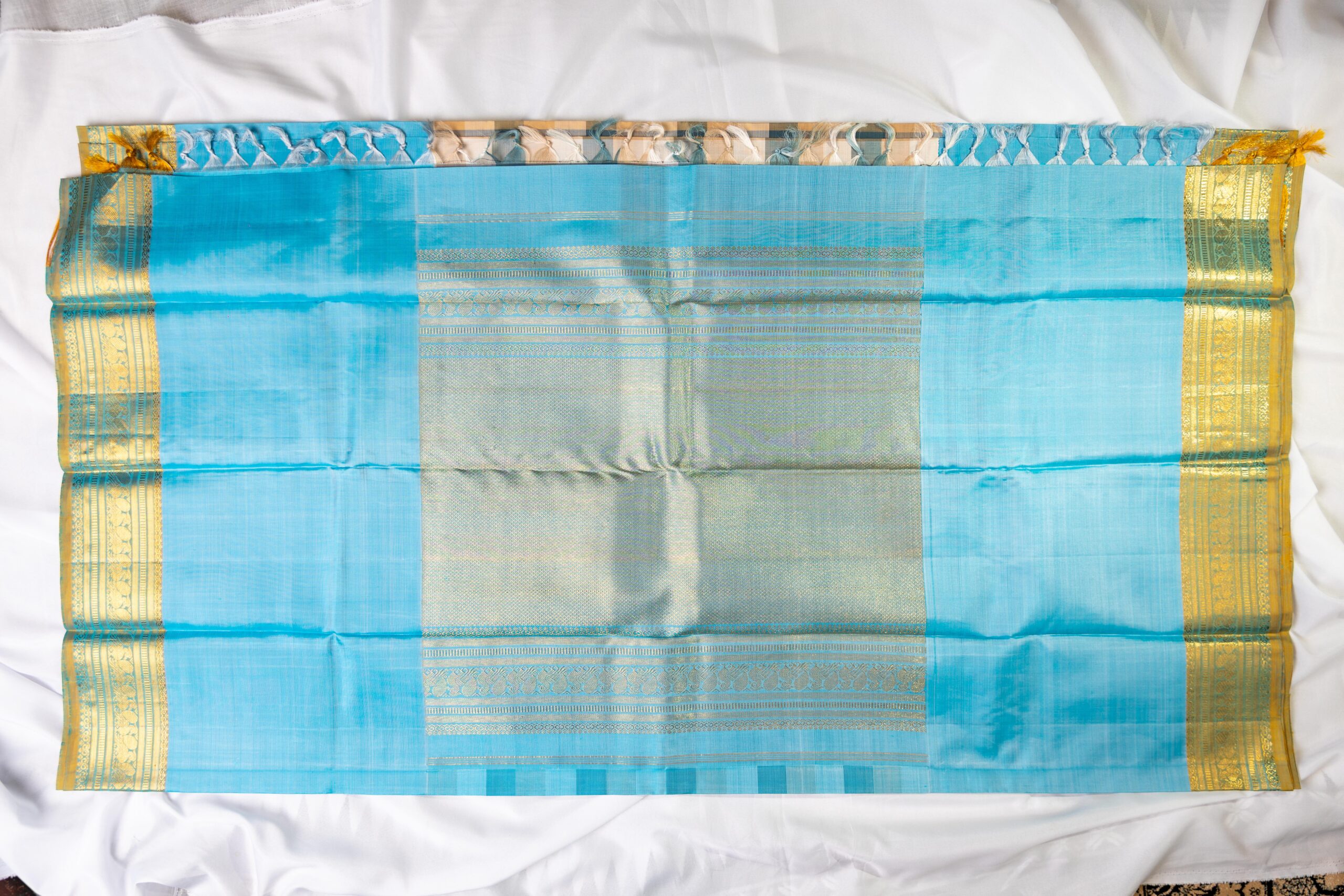
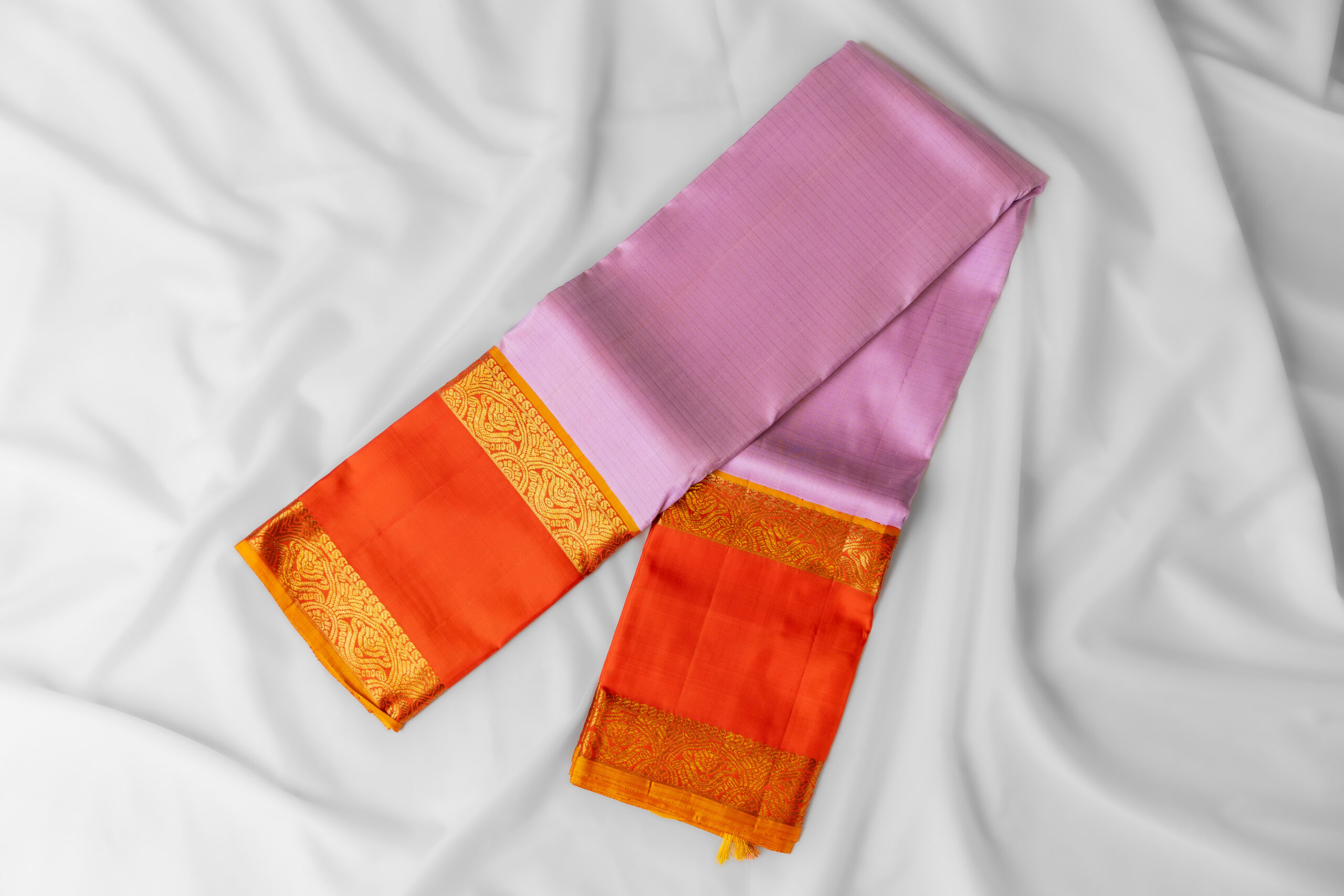
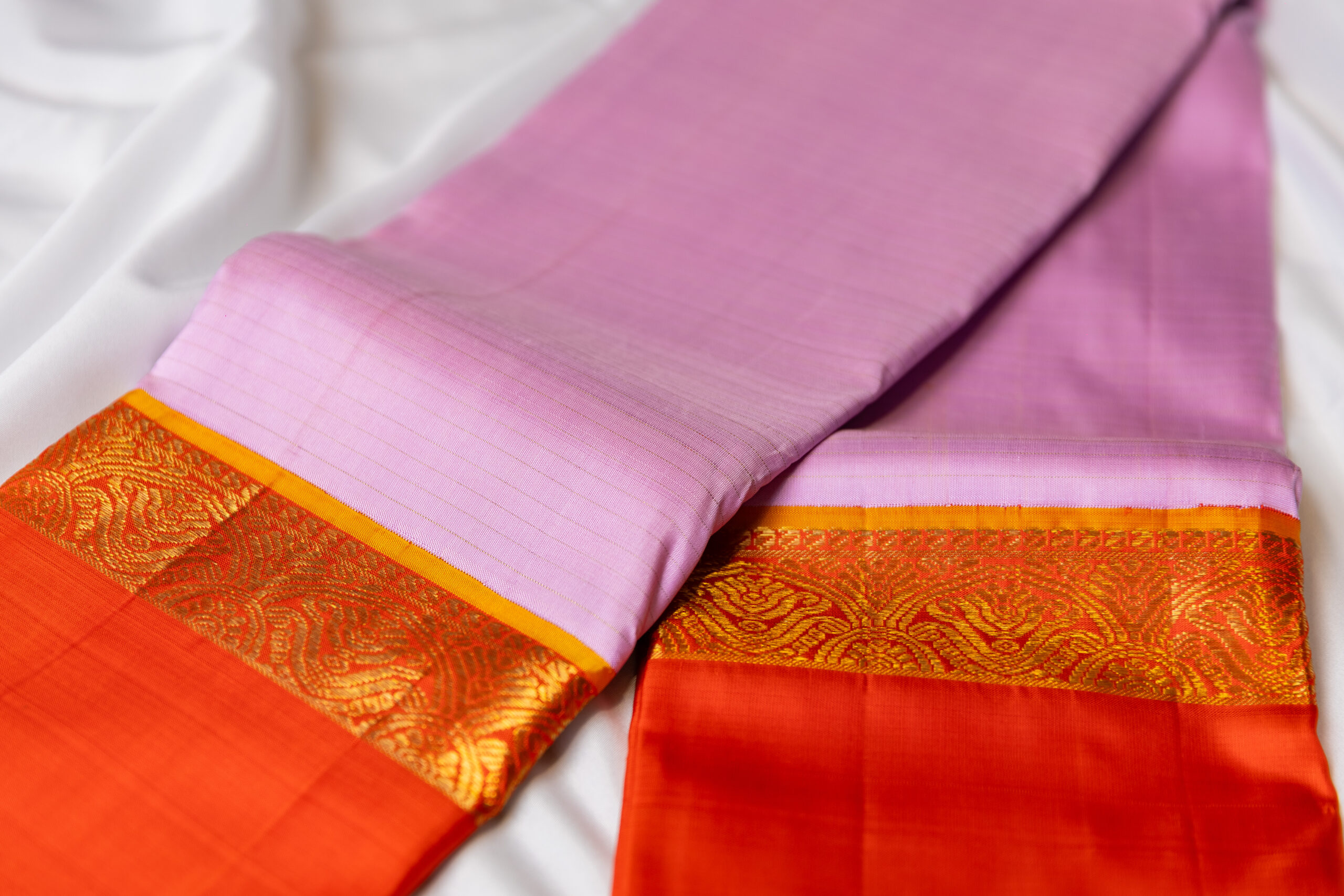
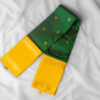
A striking vintage Kanchipuram silk saree woven in Muppagam style, featuring a rich brinjal purple body complemented by sandanam and lavenderish tones. Finished with a Kuravanji thalapu and paired with a lavenderish blouse, this saree is a beautiful blend of storytelling and traditional craftsmanship.
Out of stock
Detailed Description
This saree is a classic representation of Muppagam weaving, a traditional Kanchipuram style where the saree body is visually divided into three distinct colour zones. In this piece, the deep brinjal purple forms the dominant base, harmoniously transitioning into sandanam (sandalwood beige) and lavenderish hues, creating depth, balance, and a regal flow.
The thalapu features Kuravanji weaving, a narrative textile art inspired by folk storytelling and temple traditions. Kuravanji motifs often depict movement, celebration, and cultural scenes, making the pallu the expressive focal point of the saree.
Crafted in pure vintage Kanchipuram silk, this saree carries a rich texture, luminous sheen, and structured drape. The ensemble is completed with a matching lavenderish blouse piece, enhancing the soft contrast and refined elegance of the saree.
Product Details
| Feature | Details |
|---|---|
| Product Type | Vintage Kanchipuram Silk Saree |
| Weave Style | Muppagam |
| Body Colour | Brinjal Purple |
| Accent Colours | Sandanam & Lavenderish |
| Fabric | Pure Kanchipuram Silk |
| Thalapu (Pallu) | Kuravanji |
| Blouse Colour | Lavenderish |
| Blouse Details | Matching blouse piece |
| Finish | Artistic, heritage-rich |
| Occasion | Weddings, temple wear, cultural celebrations |
What is Kanchipuram Silk?
Kanchipuram silk is celebrated for its strength, rich texture, and timeless appeal. Woven using pure silk and traditional techniques, these sarees are treasured heirlooms.
What is Kuravanji?
Kuravanji is a classical South Indian motif style inspired by folk theatre and temple narratives. In sarees, Kuravanji weaving transforms the thalapu into a storytelling canvas, often depicting movement, festivity, and cultural life.
What is Muppagam?
Muppagam is a traditional Kanchipuram weaving style where the saree body is divided into three colour segments, woven seamlessly into one flow. This technique adds visual depth and is prized for its complexity and elegant transitions.
Photo & Colour Clarity
Every effort is made to ensure accurate colour representation. However, slight variations may occur due to lighting, photography, and individual screen settings. Natural irregularities in handloom fabrics are a hallmark of genuine craftsmanship.
| Weight | 1 kg |
|---|
Related products